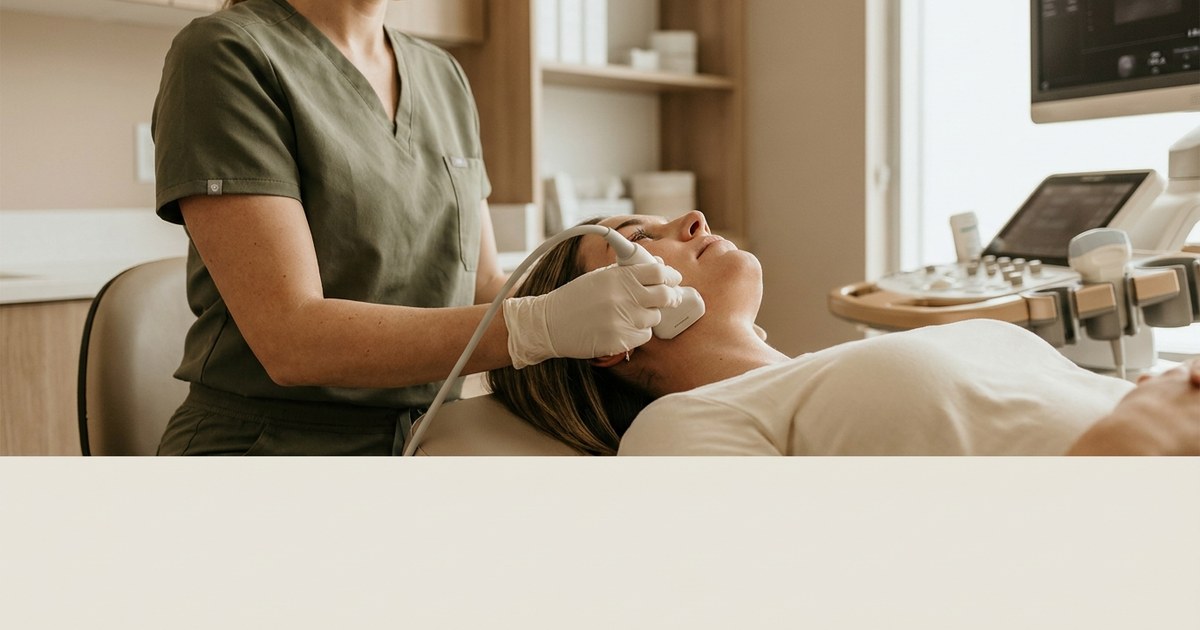
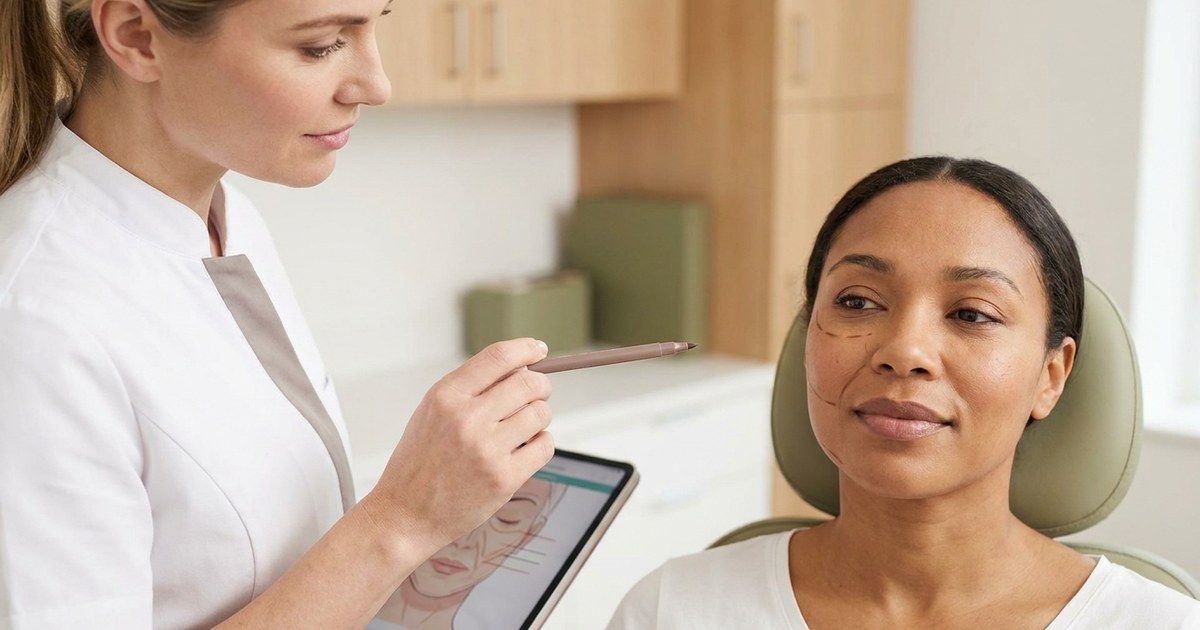
If you've invested years in a Botox or filler routine and are now exploring Sofwave skin tightening, your first question is probably about safety. Can you do both? Will one treatment interfere with the other? Yes, you can safely combine Sofwave with Botox and dermal fillers. Sofwave's ultrasound energy targets the mid-dermis at 1.5mm depth to stimulate collagen, which does not interfere with neurotoxins in muscle or hyaluronic acid filler in deeper tissue planes. Most protocols recommend a two-week spacing between treatments to allow initial swelling to resolve and ensure accurate injectable placement.
The confusion is understandable. When you're juggling multiple aesthetic treatments, the last thing you want is to waste money on protocols that cancel each other out or cause harm. This piece walks through the clinical mechanism, timing protocols, and real contraindications so you can plan both treatments strategically. Our Laser & Skin Treatments in Edina, MN are designed to work together when timed correctly.
By Sedona Laser Center
Can You Combine Sofwave and Injectables? The Short Answer
Yes. Sofwave and injectables work in different tissue layers, through different biological mechanisms, and they do not interfere with each other when spaced appropriately.
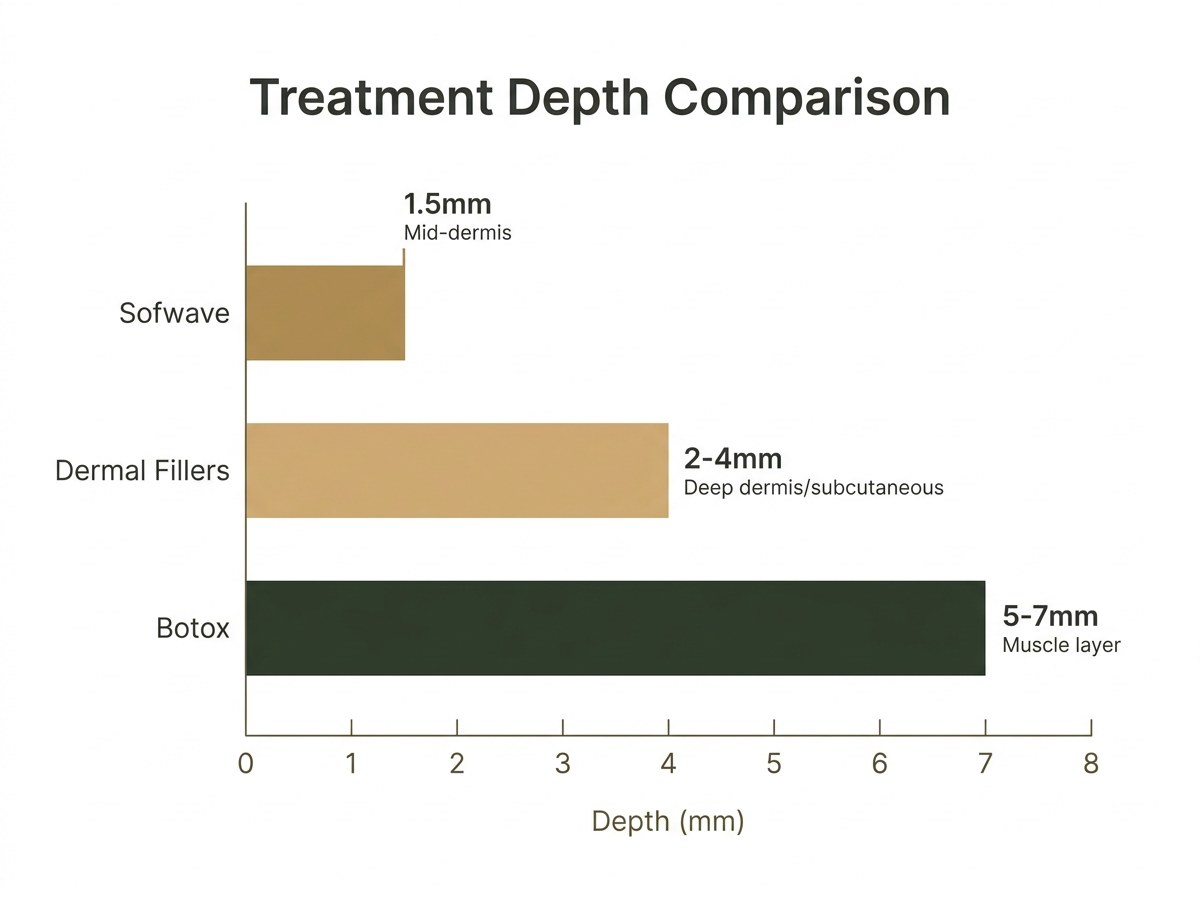
Sofwave SUPERB™ ultrasound delivers energy at exactly 1.5mm depth in the mid-dermis. At that depth, the device triggers fibroblast activity, the body's natural collagen-production pathway. Over 12 weeks post-treatment, this process tightens skin, softens fine lines, and improves texture. For a week-by-week breakdown of this collagen regeneration timeline, see Sofwave Results Timeline: When You'll See Collagen Regeneration (Week by Week).
Botox works at the neuromuscular junction, much deeper than the dermis, by blocking acetylcholine release to relax muscle activity. Dermal fillers (typically hyaluronic acid) sit in the deep dermis or subcutaneous layer, adding volume where fat or bone resorption has occurred.
Because these three treatments target distinct anatomical planes, they do not cancel each other out. The primary clinical consideration is timing. Most protocols recommend a two-week spacing between Sofwave and any injectable to allow post-treatment inflammation to resolve. This ensures accurate product placement, minimizes bruising risk, and preserves the efficacy of both treatments.
How Sofwave Works (and Why It Doesn't Conflict With Botox or Filler)
To understand why combining Sofwave with Botox and filler is safe, you need to understand the mechanism of each treatment.
Sofwave uses SUPERB™ (Synchronous Ultrasound Parallel Beam) technology to deliver precise ultrasound energy at 1.5mm depth in the mid-dermis. At this depth, the energy creates controlled micro-injury to collagen fibers, which triggers a wound-healing response. Fibroblasts migrate to the treatment zone, synthesize new collagen, and remodel existing collagen over the following 12 weeks. The result is firmer, tighter skin with improved texture and reduced fine lines. Integrated Sofcool™ cooling protects the epidermis during treatment, so surface irritation is minimal and transient (FDA 510(k) clearance for Sofwave Medical, 2019).
Botox (botulinum toxin type A) works at the neuromuscular junction, significantly deeper than the 1.5mm dermis. When injected into facial muscles, it blocks the release of acetylcholine, preventing muscle contraction. This relaxes dynamic wrinkles like crow's feet, forehead lines, and glabellar lines. The toxin does not diffuse into the dermal collagen layer where Sofwave works.
Dermal fillers (most commonly hyaluronic acid formulations like Juvéderm and Restylane) are injected into the deep dermis or subcutaneous fat to restore volume, smooth static wrinkles, and contour facial features. Once placed, the gel integrates into surrounding tissue over approximately two weeks. HA fillers attract water, providing long-lasting volume that is unaffected by ultrasound energy at 1.5mm depth.
Because Sofwave targets the mid-dermis, Botox targets muscle, and fillers sit deeper, the three treatments do not mechanically or biologically interfere. The risk is purely logistical: if you inject into inflamed or swollen tissue from recent Sofwave treatment, you increase bruising and make accurate product placement harder.
Timing Protocols (When to Schedule Each Treatment)
The two-week waiting period is the clinical standard, whether you start with Sofwave or injectables.
Sofwave first, injectables after: If you schedule Sofwave today, wait two weeks before booking Botox or filler. Sofwave causes temporary micro-inflammation as part of its collagen-stimulation mechanism. Swelling and redness typically resolve within 24 to 48 hours, but the deeper inflammatory response continues for up to two weeks. Injecting into tissue that is still inflamed increases the risk of bruising and makes accurate placement harder.
Injectables first, Sofwave after: If you had Botox or filler within the past two weeks, postpone Sofwave. Hyaluronic acid fillers take approximately 14 days to fully integrate into the surrounding tissue. Botox, once injected, begins binding to nerve terminals within hours, but waiting two weeks ensures the neurotoxin has fully localized.
Maintenance schedules: For patients who do both regularly (Botox every 12 weeks, Sofwave once or twice per year), the easiest approach is to stagger appointments by at least two weeks. Many patients schedule Sofwave in late spring and late fall, with their usual Botox appointments falling in between. The collagen regeneration from Sofwave unfolds over 12 weeks, so there's no rush to layer treatments back to back.

What About Filler Migration or Neurotoxin Interference? Addressing the Myths
Two myths persist in patient forums and social media: that ultrasound will "push filler around," and that Sofwave will "undo Botox."
Myth 1: Ultrasound causes filler migration. Filler migration risk comes from massage, pressure, or mechanical trauma within the first 24 to 48 hours after injection, when the gel has not yet integrated into tissue. Once filler has been in place for two weeks, it is stable. HA molecules bind to collagen fibers and attract water, creating a cohesive structure that does not shift in response to ultrasound energy at 1.5mm depth (Dermatologic Surgery: Hyaluronic Acid Filler Stability Post-Injection, 2020). The confusion likely stems from high-intensity focused ultrasound (HIFU) devices that treat at 4.5mm depth, targeting the superficial musculoaponeurotic system (SMAS). Those devices work in a different anatomical plane. Sofwave's 1.5mm depth is intentionally mid-dermal, far from the deeper structures where filler typically sits.
Myth 2: Sofwave interferes with Botox efficacy. Botox works by blocking acetylcholine at the neuromuscular junction. This biological mechanism is entirely independent of dermal collagen remodeling. Sofwave does not target muscle, does not generate enough heat to denature protein structures at the depth where neurotoxin binds, and does not disrupt the pharmacokinetics of botulinum toxin. The two treatments address different aesthetic concerns: Botox relaxes dynamic wrinkles caused by muscle contraction, while Sofwave improves skin laxity and texture through collagen regeneration. They work in parallel, not in opposition (Mayo Clinic: Botulinum Toxin Injections Overview, 2024).
Who Should Not Combine Sofwave and Injectables (True Contraindications)
While combination therapy is safe for most patients, certain contraindications apply.
Active infection, open wounds, or inflammatory skin conditions in the treatment area are contraindications for both Sofwave and injectables individually. Combining them compounds the risk. If you have active acne cysts, rosacea flare, eczema, or any break in the skin barrier, postpone treatment until the condition resolves.
Known hypersensitivity to botulinum toxin or hyaluronic acid fillers is a hard stop. This is rare but documented. If you've had a severe allergic reaction to any injectable in the past, do not proceed.
Pregnancy and breastfeeding. Sofwave is not studied in pregnant or breastfeeding patients, and most injectables carry similar precautionary language. The conservative approach is to wait.
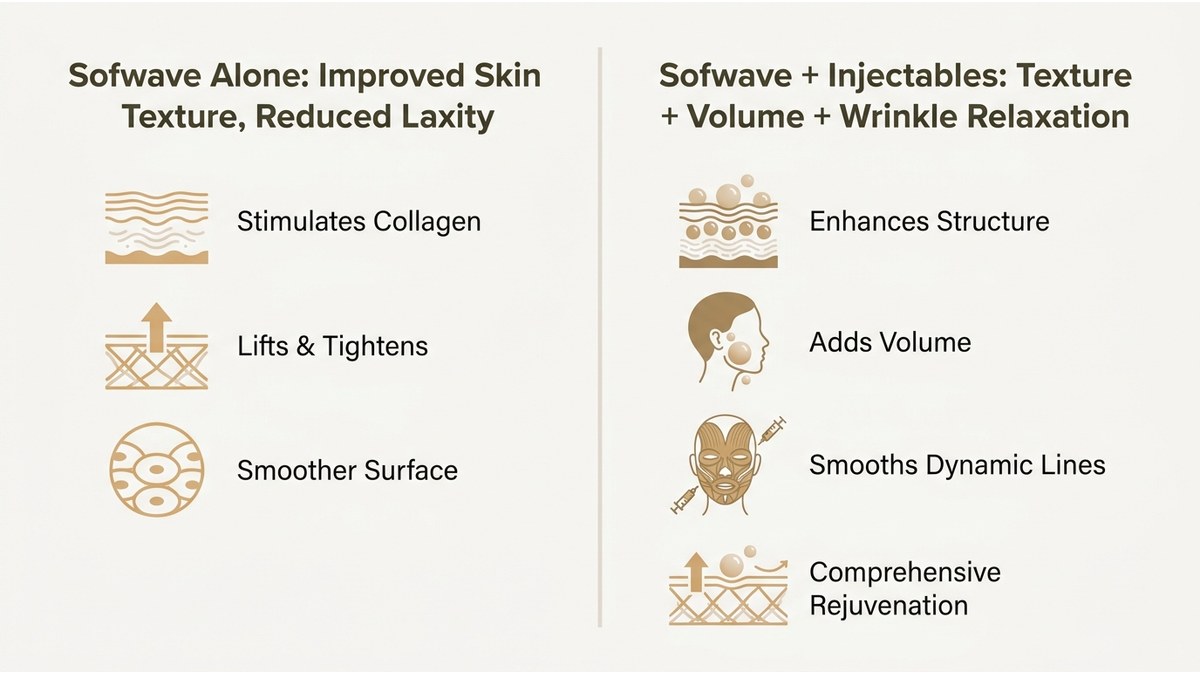
Unrealistic expectations about what combination therapy can achieve. Sofwave does not replace volume loss (that's what filler does). Botox does not tighten loose skin (that's what Sofwave does). If you expect one treatment to deliver the results of another, you're setting yourself up for disappointment.
Patients taking anticoagulants or with bleeding disorders should disclose this before any injectable procedure. Bruising risk is elevated, and while not an absolute contraindication, it requires modified technique and realistic expectations about post-treatment appearance.
Why Sedona Laser Center for Sofwave + Injectable Planning
If you're going to combine treatments, you need a provider who understands both modalities, not a clinic that added Sofwave last month to stay trendy.
Sedona Laser Center has delivered over 150,000 procedures in 17+ years, with the same core team throughout your treatment plan. We don't rotate staff. We don't outsource expertise. We specialize in two treatments done right: Laser Hair Removal in Edina, MN and Sofwave Skin Tightening in Edina, MN. That depth-over-breadth model means we've developed our own in-house protocols for patients who maintain both collagen-building and injectable schedules.
We're one of the only Sofwave providers in the Twin Cities metro, which eliminates the "shop around and compare" problem. If you want clinical results without surgery from a local provider who has built real expertise with the device, your options are extremely limited. Learn more about Sofwave Skin Tightening in the Twin Cities: Why Sedona Is Your Only Local Clinical Option. That exclusivity also means we're not learning on your face. We know how to coordinate combination protocols safely, time appointments cleanly, and set realistic expectations for cumulative outcomes.
Our dual-wavelength laser systems (755nm alexandrite, 1064nm Nd:YAG) deliver safe, effective treatment across all skin tones, from Fitzpatrick I through VI. This same precision-first approach, detailed in our guide Laser Hair Removal vs. IPL: Medical-Grade Precision and Why Wavelength Matters, extends to Sofwave: we recommend it when it makes sense, and we tell you when it doesn't.
Every consultation is free, and we're transparent about realistic outcomes, timing, and cost. A single Sofwave session typically runs $1,400, with most patients opting for one to two sessions per year depending on skin laxity and age. If you're already spending $400 to $600 per quarter on Botox and filler, adding Sofwave twice a year is a logical extension of your existing aesthetic maintenance, not a replacement.
Conclusion (Safe, Strategic Combination Is Possible and Often Recommended)
You don't have to choose between skin tightening and injectables. Sofwave and Botox or filler work in different tissue layers, through different mechanisms, and when spaced appropriately (two weeks between treatments), they complement each other.
The key is timing. If you've just had Sofwave, wait two weeks before scheduling your next injectable appointment. If you've just had Botox or filler, wait two weeks before booking Sofwave. That spacing minimizes bruising, ensures accurate product placement, and preserves the efficacy of both treatments.
Most patients who do both regularly stagger appointments throughout the year: Sofwave once or twice, Botox every 12 weeks, filler as needed. The collagen regeneration from Sofwave unfolds over 12 weeks on its own timeline, independent of what else you're doing.
At Sedona Laser Center, we've mapped these protocols for hundreds of patients who want the cumulative benefit of collagen stimulation and targeted wrinkle relaxation or volume restoration. Our consultation process is designed to review your full treatment history, answer your timing questions, and design a combination plan tailored to your skin goals.
Ready to map your treatment plan? Book your free Sofwave consultation today or call us at (952) 929-4404. We'll review your injectable history, answer your timing questions, and design a combination protocol tailored to your skin goals.