If you have PCOS, you know the frustration: you shave in the morning and feel stubble by evening. Thick, dark hair appears on your chin, jawline, abdomen, and chest (areas where you never expected it). You've tried waxing, threading, and daily shaving, but nothing lasts more than a few hours. You've been told laser hair removal won't work on hormonal hair, or that you'll need sessions forever, or that it's not safe for your skin tone. Here's the truth: laser hair removal works on PCOS-driven and hormone-triggered hair by interrupting the follicle growth cycle during the anagen (active) phase. Clinical studies show 80–90% permanent reduction over 8–12 sessions, but because hormones can activate new follicles over time, patients with PCOS often benefit from periodic maintenance every 6–12 months to manage regrowth. Laser is symptom management, not a cure, but it's one of the most effective long-term solutions available.
At Sedona Laser Center, we've treated hormonal hair for 17+ years across 150,000+ procedures using the Cynosure Elite™ dual-wavelength laser. Our Laser & Skin Treatments in Edina, MN include 755nm Alexandrite for lighter skin tones and 1064nm Nd:YAG for darker skin, making treatment safe across the full Fitzpatrick spectrum. The same technician stays with you throughout your entire series, adjusting settings and session timing as your hormones and hair growth patterns shift. We don't promise permanent removal forever. We promise honest expectations, clinical precision, and a realistic path to substantial reduction with maintenance when needed.
How Laser Hair Removal Targets Hormonal Hair at the Follicle Level
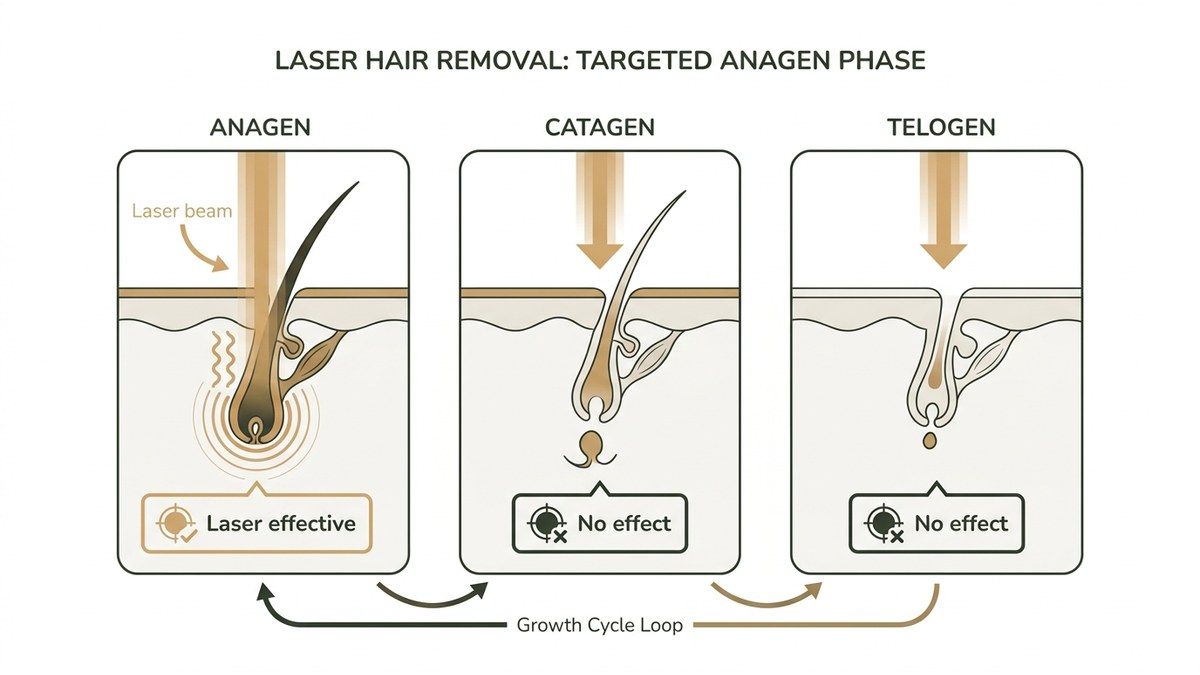
Laser hair removal works by delivering concentrated light energy that is absorbed by melanin (the pigment in your hair shaft). The energy travels down the hair to the follicle base, where it heats and damages the papilla and stem cells responsible for producing new hair. This thermal disruption interrupts the follicle's ability to grow hair, leading to permanent reduction over multiple sessions.
The key limitation: laser only affects follicles currently in anagen (active growth phase). Human hair grows in three cycles: anagen (active), catagen (transition), and telogen (resting). At any given time, only 20–30% of your facial hair and 10–20% of your body hair is in anagen phase. Follicles in catagen or telogen contain little to no melanin, so they don't absorb enough energy to be disrupted. This is why hair growth cycles require multiple sessions. You need to catch each follicle as it cycles into anagen phase over time.
For patients with PCOS or other hormonal imbalances, there's an additional complexity: laser interrupts the follicle growth cycle, but hormones can activate new follicles. Think of it this way: laser successfully disables the follicles it treats during your series, but your elevated androgen levels (testosterone) continue to send growth signals to dormant follicles in androgen-sensitive areas like your face, chin, abdomen, and chest. Those dormant follicles can wake up months or years after your initial treatment series, which is why PCOS patients often see some regrowth over time. This isn't treatment failure. It's hormones doing what hormones do. The solution is periodic maintenance to target those newly activated follicles before they establish full growth cycles.
Based on our 17+ years treating PCOS patients in the Twin Cities, patients who complete a full series and return for maintenance every 6–12 months maintain substantial long-term reduction, even as their hormones fluctuate. The hair that does return is typically finer, lighter, and slower-growing than before treatment, making daily management far less frustrating.
Why PCOS and Hormone Imbalances Cause Regrowth and What That Means for Laser Results
PCOS-driven hirsutism is fundamentally different from genetic hair growth. PCOS affects testosterone/oestrogen balance, causing hirsutism: excessive hair growth in androgen-sensitive areas where most women don't grow thick, dark hair. The condition triggers follicles in your chin, jawline, upper lip, abdomen, chest, inner thighs, and lower back to produce coarse, terminal hair instead of fine vellus hair. This isn't a one-time activation. PCOS hair is driven by hormones, meaning new follicles can become active over time, even after successful laser treatment.
Here's why this matters for your laser results: when you complete an initial series of sessions, the laser successfully disables the follicles that were active during those treatment windows. But your PCOS hasn't gone anywhere. Your androgen levels remain elevated (unless you're managing them with anti-androgen medications like spironolactone or oral contraceptives). Those elevated androgens continue to send growth signals to dormant follicles, which can activate months or even years after your last laser session. This is why some PCOS patients experience regrowth after a year or two of being hair-free.
The same hormonal mechanism affects patients in perimenopause and menopause. As estrogen drops, testosterone becomes relatively dominant, leading to new facial hair growth on the upper lip, chin, and jawline (areas where these patients never had hair before). Thyroid disorders (both hypothyroidism and hyperthyroidism) disrupt hair density and growth cycles, making regrowth patterns less predictable. Pregnancy and postpartum hormonal surges can reactivate follicles or cause new growth, which is why we postpone laser treatment until after you've finished breastfeeding and your hormone levels stabilize.
The critical takeaway: regrowth doesn't mean laser failed. It means your hormones activated new follicles. The hair that returns after laser is typically finer, lighter, and spaced farther apart than before treatment. Many PCOS patients describe it as "manageable" compared to the dense, coarse growth they dealt with before laser. And because those newly activated follicles are now in their early growth phases, a single maintenance session every 6–12 months can catch them before they establish full terminal growth. How many sessions most patients need depends on individual hormone levels, medication use, and genetic factors, but the baseline for PCOS patients is 10–12 sessions over 12–18 months, followed by periodic touch-ups.
What to Expect: Treatment Timeline, Session Count, and Maintenance for PCOS Patients
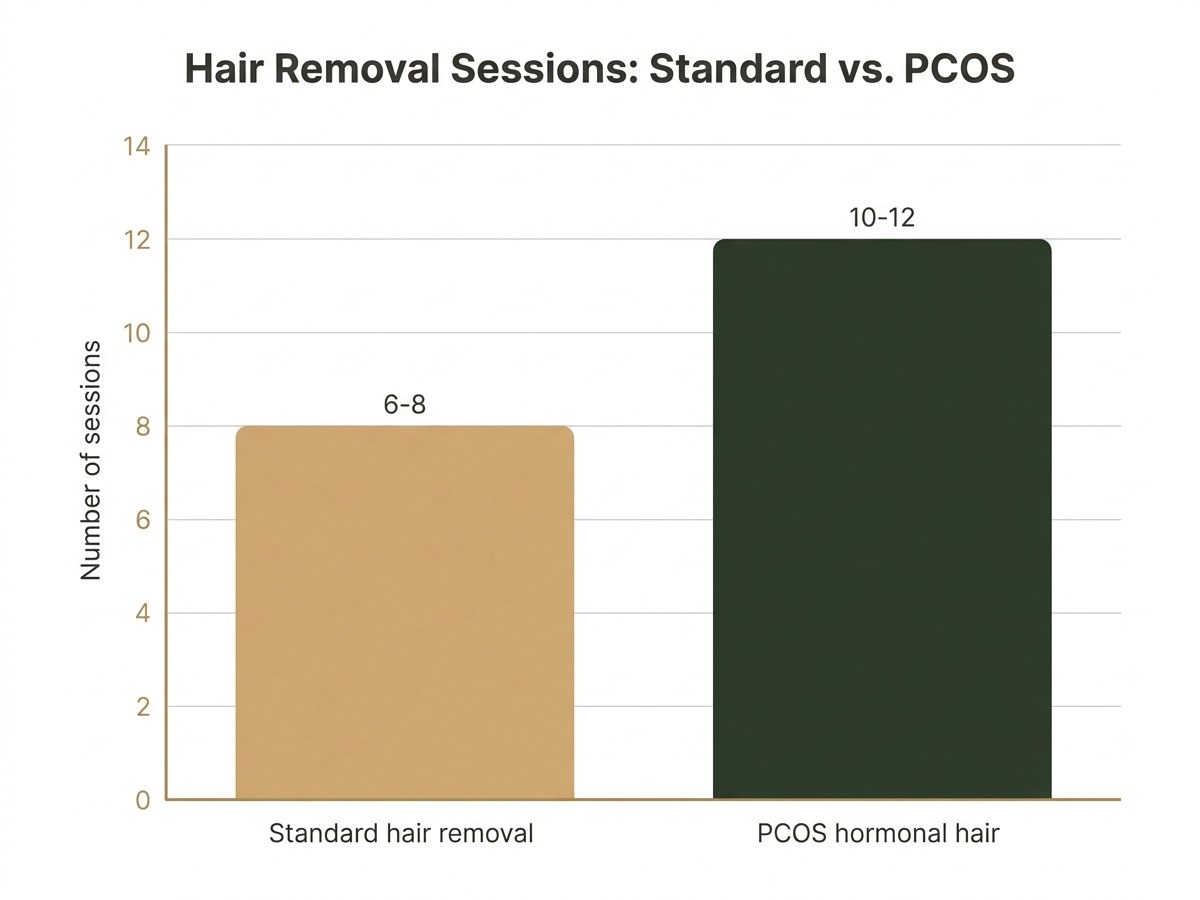
Standard laser hair removal protocols recommend 6–8 sessions spaced 4–6 weeks apart. PCOS patients typically need 10–12 sessions over 12–18 months, sometimes more. The reason: hormonal hair is denser, coarser, and distributed across more androgen-sensitive zones than genetic hair. More follicles are cycling at different times, requiring extended treatment windows to catch each wave of anagen-phase hair.
Here's what a realistic timeline looks like:
Sessions 1–4 (Months 1–4): Initial reduction. You'll notice slower regrowth and finer texture, but many follicles are still active. Some patients see 30–50% reduction by session 4.
Sessions 5–8 (Months 5–10): Progressive clearance. Most patients reach 60–80% reduction. Hair that does grow back is noticeably lighter and thinner.
Sessions 9–12 (Months 11–18): Final clearance and touch-up. By session 12, most patients achieve substantial permanent reduction. Any remaining hair is fine, sparse, and easily managed.
Maintenance phase (every 6–12 months): After your initial series, you'll return for a single session to manage any new follicles activated by hormonal fluctuations. Some patients need maintenance every 6 months; others go 12–18 months between sessions. Your technician will track regrowth patterns and adjust your maintenance schedule accordingly.
Laser works well for PCOS-related hair growth, especially when hair is dark and coarse, which describes most PCOS-driven hirsutism. The melanin contrast between dark hair and lighter skin allows the laser to deliver maximum energy to the follicle with minimal risk to surrounding tissue. Patients with lighter or finer hair may need additional sessions or adjusted settings to achieve comparable results.
Session spacing matters. We space sessions 4–6 weeks apart to allow new follicles to cycle into anagen phase. Spacing sessions too close together (every 2–3 weeks) doesn't give dormant follicles time to activate, which means you miss opportunities to treat them. Spacing sessions too far apart (every 8–10 weeks) allows treated follicles to recover before they're fully disabled, reducing overall efficacy.
One of the most common questions we hear: "Will I need sessions forever?" The answer is no, but you will likely need periodic maintenance. Think of it this way: your initial series delivers substantial permanent reduction. Maintenance sessions catch the smaller percentage of follicles that activate over time due to hormonal fluctuations. Over years of maintenance, the number of active follicles continues to decline, meaning you'll eventually space sessions farther apart or stop needing them altogether. But for most PCOS patients, understanding how to prepare for your first professional laser hair removal session includes accepting that maintenance is part of the long-term plan.
Dual-Wavelength Technology and Safety for All Skin Tones
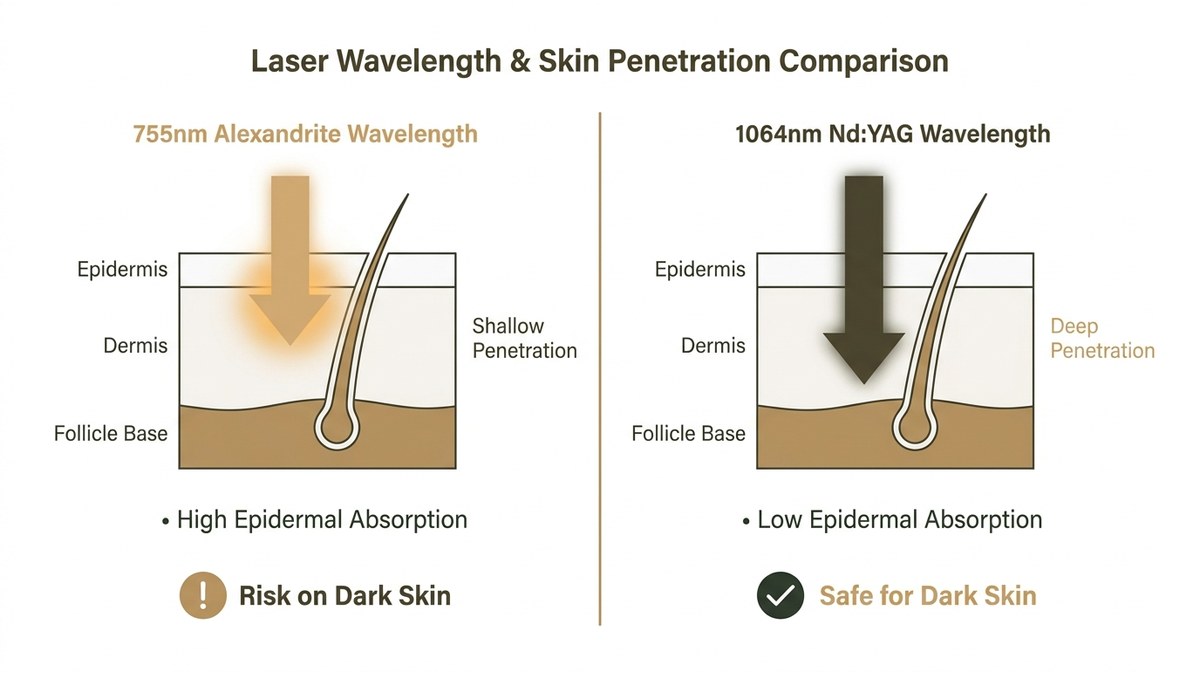
Single-wavelength lasers (particularly 755nm Alexandrite systems) are highly effective on lighter skin tones (Fitzpatrick I–III) but carry significant risk for darker skin (Fitzpatrick IV–VI). The 755nm wavelength is strongly absorbed by melanin, which means it targets hair follicles effectively, but it also targets melanin in the epidermis (skin surface). On darker skin, this epidermal absorption can cause hyperpigmentation, burns, or permanent scarring.
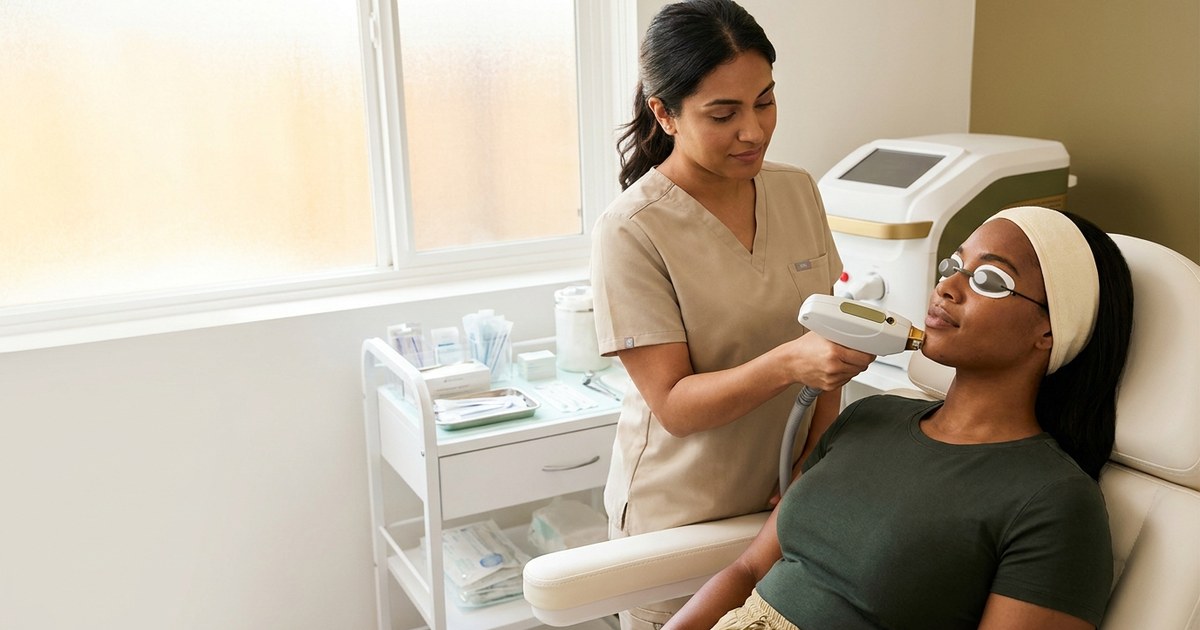
The solution is dual-wavelength technology. Sedona uses the Cynosure Elite™, which combines 755nm Alexandrite with 1064nm Nd:YAG. The Nd:YAG wavelength penetrates deeper into the dermis with less melanin absorption in the epidermis, making it the safe standard for darker skin tones. Your technician selects the appropriate wavelength based on your Fitzpatrick type, hair color, and treatment area. Lighter skin with dark hair receives 755nm for maximum energy transfer. Darker skin receives 1064nm for safe, effective follicle disruption without epidermal damage.
The system includes integrated Zimmer Cryo cooling, which delivers a burst of cold air to the skin surface immediately before each laser pulse. This pre-cooling protects the epidermis, reduces discomfort, and allows higher energy settings to be used safely. The combination of correct wavelength selection and real-time cooling makes laser hair removal safe for all skin tones when performed with medical-grade equipment and trained technicians.
Many PCOS patients are women of color who've been dismissed or poorly served by clinics using single-wavelength systems or IPL devices. IPL (Intense Pulsed Light) uses broad-spectrum light rather than a true laser beam, making it less precise and less effective, particularly on darker skin tones. IPL devices are often marketed as "laser" treatments: they are not. Understanding the difference between laser and IPL technology comes down to physics: longer wavelengths penetrate deeper with less surface absorption, reducing the risk of burns and hyperpigmentation while maintaining follicle-disrupting energy.
At Sedona, every consultation includes a Fitzpatrick assessment and test spot to confirm safe settings before your first full session. We adjust energy levels, pulse duration, and cooling intervals based on your skin's response, not a one-size-fits-all protocol. The same technician performs every session in your series, which means they learn your skin's tolerance, track your hair reduction patterns, and adjust settings as your hair thins and lightens over time.
Medications, Timing, and Clinical Considerations During Treatment
Most PCOS medications (metformin, spironolactone, oral contraceptives) are compatible with laser hair removal. You do not need to stop taking them before or during treatment. Inform your technician about all prescriptions and supplements at your consultation so they can flag any photosensitizing drugs (antibiotics like doxycycline, certain acne medications) that require temporary treatment delays. Spironolactone, an anti-androgen medication commonly prescribed for PCOS-related hirsutism, can actually improve laser outcomes by reducing the hormonal signal that activates new follicles. Patients on spironolactone often see less regrowth between maintenance sessions compared to those managing PCOS through lifestyle changes alone.
Laser treatment is postponed during pregnancy due to hormonal surges and skin sensitivity changes. There is no evidence that laser harms a developing fetus, but pregnancy increases melanin production (melasma, linea nigra), which raises the risk of hyperpigmentation from laser exposure. We recommend waiting until after you've finished breastfeeding and your menstrual cycle has stabilized before resuming or starting laser treatment. Postpartum hormone shifts can reactivate dormant follicles or cause new hair growth, particularly on the face and abdomen. Many patients schedule their first post-pregnancy session 3–6 months after delivery, once they've had a few regular cycles and their hormone levels have normalized.
Timing around your menstrual cycle doesn't typically affect laser efficacy, but some patients experience increased skin sensitivity or discomfort during the week before menstruation. If you have a known sensitivity pattern, schedule sessions during the follicular phase (days 1–14 of your cycle) when estrogen is higher and pain tolerance tends to be better. Your technician can adjust cooling settings and pulse duration to minimize discomfort regardless of cycle timing.
Thyroid disorders (hypothyroidism, hyperthyroidism) can disrupt hair growth cycles and density, making laser outcomes less predictable. If you have an active thyroid condition, make sure it's managed and stable before starting laser treatment. Uncontrolled thyroid imbalances can cause excessive shedding (telogen effluvium) or patchy regrowth that complicates treatment planning.
For our laser hair removal clinic serving Edina and the Twin Cities, every PCOS consultation includes a full medical history review, Fitzpatrick assessment, test spot, and discussion of realistic expectations. We don't pressure you into a package. We map out a treatment plan based on your hormone levels, medication use, hair density, and long-term goals, then adjust session count and maintenance intervals as we see how your hair responds. Transparency is part of the clinical process.
Conclusion
Laser hair removal works on PCOS-driven and hormone-triggered hair by interrupting follicle growth during the anagen phase. Clinical research documents substantial permanent reduction over a full treatment series, with periodic maintenance every 6–12 months to manage new follicles activated by hormonal fluctuations. It's not a cure. It's symptom management. But for most PCOS patients, that reduction is life-changing. No more shaving twice a day. No more razor bumps, ingrown hairs, or visible stubble hours after grooming. The hair that does return is finer, lighter, and slower-growing, making it far easier to manage.
Sedona Laser Center's dual-wavelength Cynosure Elite™ system is safe for all skin tones, including darker skin that single-wavelength lasers put at risk. The same technician stays with you throughout your series, adjusting settings and timing as your hormones and hair patterns shift. We've treated hormonal hair for 17+ years across 150,000+ procedures. We know what works, what doesn't, and how to set realistic expectations from your first consultation.
Ready to take the first step? Book your free consultation today or call (952) 929-4404 to speak with our team and map out your treatment plan.