
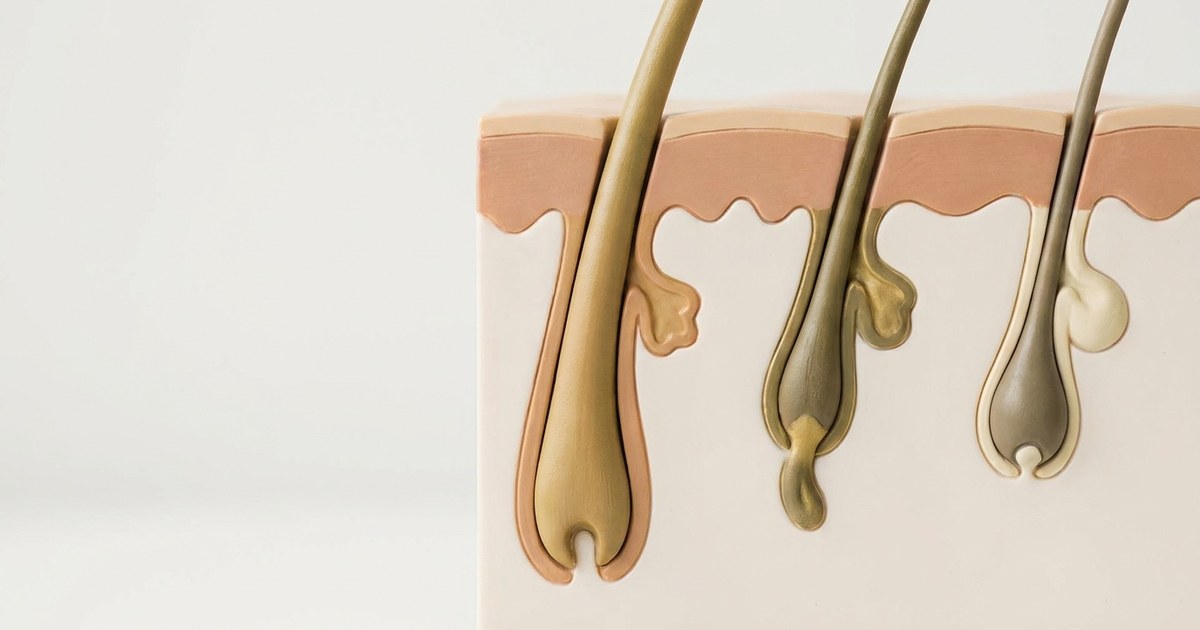
Why does laser hair removal require multiple sessions? Hair grows in three phases: anagen (active growth), catagen (transition), and telogen (resting). Laser hair removal only works on hair in the anagen phase, when the follicle is actively producing pigment. Because only a fraction of your hair is in anagen at any given time, multiple sessions spaced 4 to 6 weeks apart are necessary to catch every follicle as it cycles back into the growth phase, ultimately achieving lasting permanent reduction.
If you've ever wondered why one laser hair removal session can't eliminate all your unwanted hair, the answer lies in biology, not marketing. Your hair follows a precise anagen phase hair growth pattern that determines when each follicle can be treated. Understanding these hair growth cycle laser sessions explains why Cynosure Elite™ dual-wavelength laser hair removal requires a full series to deliver lasting results.
At Sedona Laser Center, we've performed 150,000-plus procedures over 20-plus years, and we've learned that patients who understand the science behind hair growth cycles anagen catagen telogen are more likely to complete their full treatment series and achieve optimal outcomes. This guide explains exactly why multiple sessions work, what happens between treatments, and how to set realistic expectations for permanent reduction.
The Three Phases of Hair Growth: Anagen, Catagen, Telogen
Every hair on your body moves through three distinct phases in a continuous cycle. These phases happen simultaneously across your body, but not synchronously. While one follicle is actively growing, the one next to it may be resting. This asynchronous pattern is why multiple laser sessions are necessary.
The three phases differ fundamentally in what's happening inside the follicle, how long they last, and whether laser energy can disable the follicle during that phase.
Anagen (Active Growth Phase): The Only Window for Laser Effectiveness
The anagen phase is the active growth period when the follicle is producing a hair shaft and the root is deeply anchored in the dermis. During the anagen phase hair follicle activity, melanin pigment is actively produced, creating the target that laser energy needs to disable permanent regrowth. According to dermatological research on laser hair removal mechanisms, this is the only phase where selective photothermolysis (the process of targeting melanin with laser light) can effectively damage the follicle's ability to produce new hair.
Anagen duration varies significantly by body location. Facial hair has an anagen phase of only 4 to 6 weeks, which is why the face requires shorter spacing between sessions. Underarm and bikini hair stays in anagen for 4 to 6 weeks as well. Leg and arm hair, however, can remain in active growth for 8 to 12 weeks or longer, requiring different treatment timing for optimal results.
Research shows that only a portion of hair is in anagen at any given time, which is the foundation for why multiple laser sessions are necessary. You're treating only a fraction of your total hair follicles in each session.
Catagen (Transition Phase): The Follicle Detaches
Catagen is a brief transitional period lasting 2 to 3 weeks. During this phase, the hair follicle shrinks and detaches from its blood supply. The hair stops growing but remains anchored in the follicle temporarily before entering the resting phase.
Laser hair removal is ineffective during catagen because the follicle is no longer actively producing pigment. The melanin target that laser energy needs to reach has already formed, and the follicle is in the process of shutting down. Energy delivered during this window cannot disable future hair production because the biological machinery that would regenerate the follicle is already dormant.
Telogen (Resting Phase): The Dormant Window
The telogen phase is the resting period that can last 2 to 4 months or longer depending on body location. The follicle is completely dormant, and the old hair eventually sheds. A new hair begins to form at the base of the follicle toward the end of telogen, preparing to enter anagen again.
Laser hair removal cannot treat telogen-phase hair because there is no active follicle to target. The hair shaft that remains visible during telogen contains melanin, but it's disconnected from the follicle. Laser energy may heat the hair itself, but it cannot reach the root structure that would regenerate new growth.
This is why you see "new" hair appear between sessions. It's not treatment failure. Those follicles were in telogen during your previous session and are now cycling into anagen, where they become treatable for the first time.
Why Only a Fraction of Your Hair Is Treatable at Any Given Time
The asynchronous nature of hair growth cycles anagen catagen telogen means that at any moment, your hair follicles are distributed across all three phases. While one follicle is actively growing, its neighbor may be resting, and another may be in transition. This distribution is why a single session (no matter how powerful the laser) cannot treat all your hair.
Facial hair has the fastest turnover, with follicles cycling more rapidly and spending less time in the active growth phase. Body hair on the legs, arms, underarms, and bikini area typically has a different distribution pattern across the three phases.
If you treat your legs today, you're only addressing a portion of the total follicles that will ever grow hair in that area. The remaining follicles are either transitioning or resting, and they will need to be treated in subsequent sessions as they cycle back into anagen. This is not a limitation of the technology. It's a biological constant that applies to every hair removal method that targets the follicle.
Understanding this distribution helps set realistic expectations. After your first session, you may see significant hair reduction in the treated follicles, but new growth will appear as dormant follicles wake up and enter anagen. Each session catches the next wave of follicles, building toward the cumulative 80 to 90 percent permanent reduction achieved after a full series.
The Science of Selective Photothermolysis: Why Anagen Hair Absorbs Laser Energy
Laser hair removal works through a process called selective photothermolysis: targeting a specific chromophore (melanin) in the hair follicle with a precise wavelength of light that converts to heat and disables the follicle's ability to produce new hair. The Cynosure Elite™ system at Sedona Laser Center uses two wavelengths. 755nm Alexandrite for lighter skin tones and 1064nm Nd:YAG for darker skin tones.
The laser beam passes through the skin and is absorbed by melanin in the hair shaft and follicle. This absorption generates heat (enough to damage the follicle's stem cells and blood supply without harming the surrounding skin). The follicle is disabled, and future hair production stops.
This mechanism only works when the follicle is actively producing melanin, which happens exclusively during the anagen phase. In catagen and telogen, the follicle either has minimal pigment or is detached from the structures that would allow heat transfer to the regenerative cells. Firing laser energy at a telogen-phase follicle is like trying to disable a machine that's already turned off. The target isn't active, so the treatment has no effect.
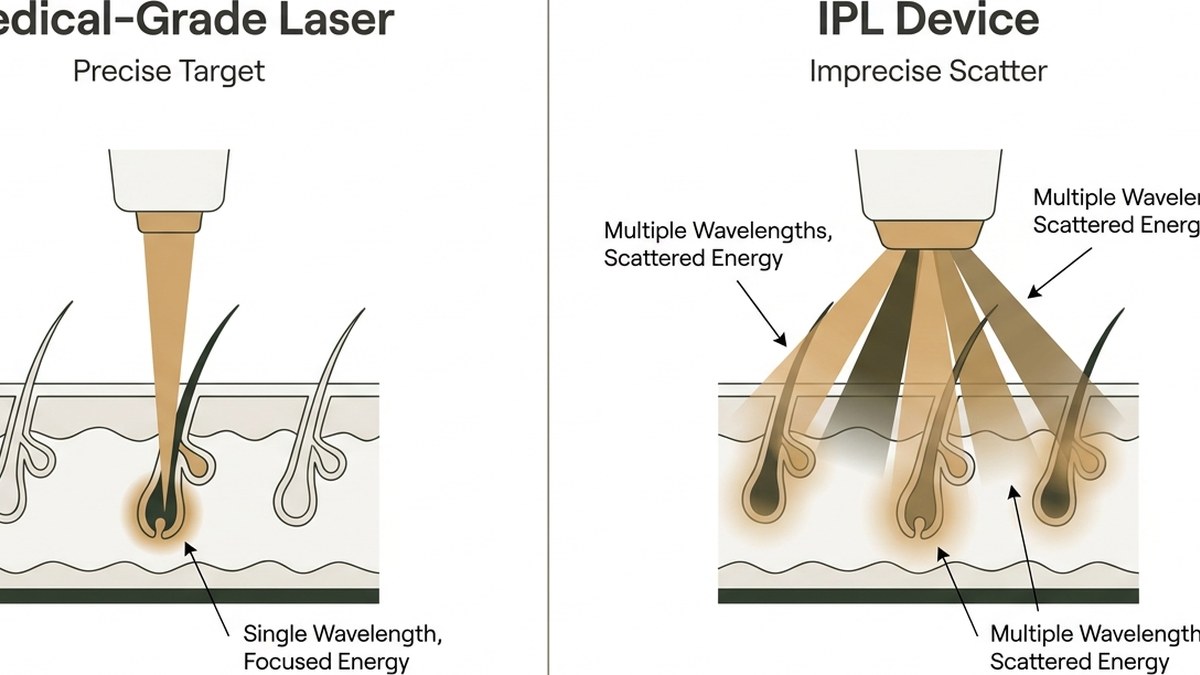
This is why wavelength precision matters for permanent reduction. True laser systems deliver a single, targeted wavelength at controlled energy levels. IPL (Intense Pulsed Light) devices use broad-spectrum light that scatters across multiple wavelengths, making them less effective at reaching the follicle and particularly risky for darker skin tones where excess energy can cause burns or pigmentation changes.

Why Spacing Matters: Timing Sessions to Catch the Next Anagen Wave
The standard 4 to 6 week spacing between laser hair removal sessions is not arbitrary. It's designed to align with the average anagen cycle length for different body regions, ensuring that you catch the maximum number of follicles as they transition from telogen back into the growth phase.
Facial hair cycles fastest, with most follicles completing the full growth cycle in 4 to 6 weeks. This is why facial treatments are typically scheduled every 4 weeks. Underarm and bikini hair follows a similar timeline. Scheduling 4 to 6 weeks between sessions captures the majority of new anagen-phase follicles.
Leg and arm hair has a longer cycle, with anagen phases lasting 8 to 12 weeks or more. For these areas, spacing sessions 6 weeks apart is standard, though some patients benefit from extending to 8 weeks in later sessions when fewer follicles remain active.
Spacing sessions too close together (say, every 2 to 3 weeks) wastes treatment. You're re-treating the same follicles that were already in anagen during your last session, which have now transitioned into catagen or telogen and are no longer treatable. The follicles that were resting during your last session haven't had time to cycle back into anagen yet, so you miss them entirely.
Spacing sessions too far apart (10 or more weeks) allows some follicles to cycle through anagen and back into telogen before you catch them. You lose the opportunity to treat those follicles during that growth cycle, extending the total timeline to achieve full reduction.
The detailed session timeline by body region accounts for these differences, mapping the optimal spacing for each area based on average cycle length and the follicle distribution at each stage of treatment.
How Many Sessions Does It Take? What the Full Timeline Looks Like
A full laser hair removal series typically requires 8 to 12 sessions to achieve lasting results. The exact number depends on your hair type, skin tone, the body area being treated, and individual variations in hair growth cycles anagen catagen telogen.
Facial hair is the most variable and often requires 10 to 12 sessions because the anagen phase is short and follicles cycle rapidly. Hormonal influences (which we'll address in the next section) can also activate new facial follicles over time, particularly for patients with PCOS or androgen-driven growth.
Underarm and bikini hair typically requires 8 to 10 sessions. These areas have thicker, denser hair with strong anagen-phase pigment, making each session highly effective. But the hair cycles quickly, so consistent spacing is critical.
Leg and arm hair usually achieves full reduction in 8 to 10 sessions. The longer anagen phase means fewer total sessions are needed to catch all the follicles, though the timeline stretches longer due to the 6-week spacing.
The 80 to 90 percent permanent reduction outcome is cumulative across the full series, not per session. After your first session, you may see reduction in that area (the follicles that were in anagen and successfully treated). After your second session, you've now treated a larger portion of total follicles (the original group plus the new wave). By session 8 to 12, you've caught the vast majority of follicles as they cycled through anagen at least once.
In our 20-plus years and 150,000-plus procedures at Sedona Laser Center, we've found that patients who complete the full 8 to 12 session series achieve the most consistent, long-lasting results with minimal maintenance needed. Patients who stop after 4 to 5 sessions often see regrowth from untreated follicles and return to finish the series later.
What "Permanent Reduction" Means (Not Permanent Removal)
The FDA-approved terminology for laser hair removal outcomes is "permanent reduction," not "permanent removal." This distinction matters because it sets accurate expectations.
Permanent reduction means that the treated follicle is disabled and produces no more hair, or produces only fine, light vellus hair (the soft, nearly invisible hair that covers most of your body). The follicle is not destroyed entirely. It remains in the skin, but it can no longer generate the thick, pigmented terminal hair it produced before treatment.
Permanent removal would imply that 100 percent of follicles are eliminated forever with zero maintenance. That outcome is not biologically achievable for most patients because hair growth is influenced by hormones, and hormonal shifts over time (puberty, pregnancy, menopause, PCOS, thyroid changes) can activate dormant follicles that were not previously producing visible hair.
Most patients achieve strong reduction after a full series and experience little to no regrowth. Some patients opt for an occasional maintenance session (once every 12 to 24 months) to treat any minimal regrowth, especially on hormonally influenced areas like the face, chin, or bikini line. This is normal and does not indicate treatment failure. It's a biological response to hormonal activity, and a single maintenance session every year or two keeps the area smooth.
Sedona Laser Center is transparent about this distinction because honesty about outcomes builds trust. We won't promise permanent removal when the clinical reality is permanent reduction with optional maintenance.
Special Cases: Hormonal Hair (PCOS, Menopause) and Cycle Variability
For some patients, hair growth is heavily influenced by androgens (male hormones like testosterone) or other hormonal imbalances. Conditions like polycystic ovary syndrome, thyroid disorders, and menopause can cause new terminal hair to appear in areas that previously produced only vellus hair, or they can extend the anagen phase of existing follicles.
PCOS-driven hair is typically thicker, darker, and more stubborn than hair caused by genetics alone. It often appears on the face, chin, upper lip, chest, and abdomen (areas where women typically don't have dense terminal hair). The challenge with PCOS hair is that androgens can activate dormant follicles over time, meaning new hair can appear even after a full laser series has successfully treated the original follicles.
Laser hair removal works for PCOS patients, but it requires realistic expectations. You will achieve significant reduction (often in line with typical outcomes for the hair present at the start of treatment), but new follicles may activate in the months or years following your series, especially if your hormonal levels remain elevated. Many PCOS patients return for annual maintenance sessions to treat these new growths.
Menopause can shift hair growth patterns as well. Estrogen levels drop, and the relative androgen activity increases, sometimes causing new facial hair or thicker hair on the chin and upper lip. Post-menopausal patients may need additional sessions or maintenance treatments to address this new growth.
The hair growth cycle itself can also vary with hormonal changes. Pregnancy, for example, can prolong the anagen phase, causing temporary hair thickening, while postpartum shedding accelerates the telogen phase. We recommend waiting until after pregnancy and breastfeeding to resume laser hair removal so that hormonal cycles stabilize and treatment timing is predictable.
If you have a diagnosed hormonal condition or suspect one, communicate that during your consultation. We'll map a treatment plan that accounts for the likelihood of ongoing hormonal influence and sets realistic expectations for maintenance needs.
Does IPL or At-Home Laser Follow the Same Rules?
The hair growth cycle applies to all light-based hair removal methods, but not all methods are equally effective at targeting anagen-phase follicles. Medical-grade laser systems like the Cynosure Elite™ at Sedona Laser Center deliver targeted wavelengths and energy levels that IPL and at-home devices cannot replicate.
IPL (Intense Pulsed Light) devices use broad-spectrum light rather than a true laser beam. This light scatters across multiple wavelengths, making it less precise and less effective at reaching the follicle. Research comparing professional laser systems to IPL shows that true laser technology delivers higher follicle-disabling rates with fewer sessions. IPL is particularly risky for darker skin tones because the scattered light can heat the epidermis and cause burns or pigmentation changes, rather than targeting the follicle cleanly.
At-home laser devices lack the energy output necessary to disable the follicle permanently. These devices may temporarily slow hair growth or reduce hair thickness, but they do not achieve the permanent reduction that medical-grade systems deliver. You're still subject to the same anagen, catagen, telogen cycle, but without the power to disable the follicle during the anagen window, you'll see regrowth as soon as you stop treatments.
The distinction matters because understanding hair cycles anagen catagen telogen is most valuable when you're using technology that can actually deliver permanent results. If you're only slowing regrowth temporarily, the cycle knowledge doesn't change your outcome. You'll need continuous treatments indefinitely. With our laser hair removal and skin tightening services, the cycle knowledge helps you commit to the full 8 to 12 session series, understanding that each session is catching a new wave of anagen-phase follicles and building toward lasting reduction.
What to Expect Between Sessions: Shedding, Regrowth, and Why It's Working
The 4 to 6 weeks between laser hair removal sessions often confuse first-time patients because hair behavior doesn't match what they expect. Understanding what's happening to treated follicles (and untreated ones) helps you recognize that the process is working even when it looks like hair is growing back.
Treated hair (follicles that were in anagen during your session) will shed 1 to 3 weeks after treatment. This is not new growth. It's the damaged hair shaft being expelled from the follicle. You may notice hair appearing to "push out" of the skin, or you may see hair fall out when you gently exfoliate or shave. This shedding confirms that the follicle was successfully treated.
"New" growth that appears 3 to 6 weeks after your session is not regrowth from treated follicles. It's hair from follicles that were in telogen or catagen during your last session and are now cycling back into anagen. These follicles are becoming treatable for the first time, and they'll be targeted in your next session. This is why spacing matters. You're timing the next session to catch this new anagen wave.
Shaving between sessions is fine and does not interfere with the treatment cycle. Shaving cuts the hair at the skin surface but leaves the follicle and root intact, so the next laser session can still target the pigment in the follicle. Waxing, plucking, and threading are not recommended because they remove the entire hair shaft and root, eliminating the melanin target that the laser needs. If you wax between sessions, you may extend your timeline because follicles that were ready to be treated are now temporarily rootless.
Some patients notice that hair grows back finer or lighter after the first few sessions. This is a positive sign. It means the follicle was weakened but not fully disabled, and the next session will likely finish the job. Finer, lighter hair is also easier to treat because it indicates reduced pigment production, which often precedes full follicle shutdown.
Patience during this phase is critical. The process is cumulative. Each session disables another wave of your total follicles, and by session 8 to 12, you've caught the vast majority as they cycled through anagen. Trust the timeline, and resist the urge to judge results after only 2 to 3 sessions. You're not even halfway through the cycle yet.
Conclusion: Understanding the Cycle Helps You Commit to the Full Series
The reason laser hair removal requires 8 to 12 sessions is not a sales tactic. It's a biological reality. Hair grows in three phases (anagen, catagen, telogen), and only anagen-phase follicles can be treated. Because only a portion of your hair is in anagen at any given time, multiple sessions spaced 4 to 6 weeks apart are the only way to catch every follicle as it cycles back into the growth phase.
Patients who understand this cycle are more likely to complete the full series and achieve the lasting permanent reduction outcome that laser hair removal delivers. Patients who expect one or two sessions to eliminate all their hair often abandon treatment early, frustrated by what they perceive as failure, when in reality they've only treated a fraction of their total follicles.
At Sedona Laser Center, we've performed 150,000-plus procedures over 20-plus years of clinical precision in Edina. We've seen the difference that patient education makes. When you understand the science behind the timeline, you're more likely to trust the process, stay consistent with spacing, and finish the series. And when you finish the series, you get the results you were promised: lasting reduction, minimal regrowth, and the confidence that comes from smooth, hair-free skin.
We also offer Sofwave skin tightening treatments for clients looking to address skin laxity alongside hair removal, providing comprehensive solutions for aesthetic goals. For more educational content on evidence-based treatment approaches, explore our blog hub.
Our unwavering commitment to client education ensures that every patient understands not just what we do, but why it works. We believe informed clients achieve better outcomes because they stay committed to the full treatment series. Understanding the hair growth cycle laser treatment principles is the foundation of that commitment.
For questions about how your specific hair type and skin tone will respond to treatment, or to learn more about our pricing and package options, we encourage you to reach out directly. Every consultation is personalized to your unique biology and aesthetic goals.
Ready to start your laser hair removal journey with a clinic that will give you honest recommendations and a personalized treatment plan? Schedule your free consultation. No pressure, just clinical expertise and transparent outcomes.