

By Primary Contact, primary_contact at Sedona Laser
Most laser hair removal systems force a tradeoff. Alexandrite lasers work fast on light skin but carry burn risk for darker tones. Nd:YAG lasers are safe for dark skin but slower to treat. IPL devices claim to do it all but lack precision for either. Sedona Laser Center uses the Cynosure Elite™ because it eliminates that compromise.
The Cynosure Elite™ combines 755nm Alexandrite and 1064nm Nd:YAG wavelengths in a single system. Alexandrite delivers precision and speed for lighter skin tones (Fitzpatrick I–III), while Nd:YAG penetrates deeper to safely target hair follicles in darker skin (Fitzpatrick IV–VI) without damaging surrounding melanin. Together, they achieve 80–90% permanent hair reduction across all skin types (PubMed clinical outcomes data). This is the direct answer to why dual-wavelength technology matters. One system, all patients, optimal outcomes for each. No one turned away because their skin tone doesn't fit the equipment.
If you have been dismissed elsewhere, told "laser doesn't work on your skin," or are researching which technology is safe for your Fitzpatrick type, this guide explains how dual-wavelength systems work, why wavelength selection determines both safety and efficacy, and what to expect from a full treatment series at Sedona Laser. We have completed more than 150,000 procedures in over 20 years. We treat every skin tone. Here is what you need to know about the technology, the timeline, and how medical-grade laser differs from IPL devices.
Why Laser Hair Removal Requires Wavelength Precision
Laser hair removal works by targeting melanin in the hair follicle. The laser beam converts to heat, destroying the follicle's ability to produce hair. That is the clinical mechanism. But here is the problem: melanin exists in both the hair follicle and the surrounding skin. Wavelength determines how deeply the laser light penetrates and how much energy is absorbed by skin melanin versus hair melanin. Choose the wrong wavelength for your skin tone and you risk burns, hyperpigmentation, or poor results.
What Wavelength Means (and Why It Matters for Your Skin Tone)
Wavelength is measured in nanometers (nm). It determines how far the laser penetrates into the skin and which structures absorb the most energy. Shorter wavelengths (755nm) are highly absorbed by melanin, which makes them fast and effective for light skin where the contrast between hair melanin and skin melanin is high. Longer wavelengths (1064nm) penetrate deeper and are less absorbed by surface melanin, making them safe for darker skin where both hair and skin contain significant melanin.
Clinical studies confirm that wavelength selection determines both efficacy and safety. Shorter wavelengths deliver high melanin absorption for faster treatment of light skin, while longer wavelengths penetrate deeper to safely target follicles in darker skin without damaging surface melanin. This is not a marketing claim. It is physics. The wavelength you choose dictates who you can safely treat.
Fitzpatrick types I–III (light to medium skin that burns easily) respond best to 755nm Alexandrite because the high melanin absorption allows the laser to target the follicle with minimal energy scatter. Fitzpatrick types IV–VI (brown to very dark brown skin that tans easily or never burns) require 1064nm Nd:YAG because the longer wavelength bypasses surface melanin and delivers energy to the follicle without overheating the epidermis. No single wavelength does both safely.
The Single-Wavelength Tradeoff: Speed or Safety, Not Both
Alexandrite-only systems are the fastest way to treat large areas on light skin. They have decades of clinical validation. But they carry burn and hyperpigmentation risk for Fitzpatrick IV–VI patients because the high melanin absorption in darker skin creates excessive surface heating. Many clinics using Alexandrite-only lasers will not treat darker skin at all.
Nd:YAG-only systems are the gold standard for darker skin. They penetrate 4mm into the dermis, bypass surface melanin, and deliver energy to the follicle with minimal risk. But they are slower to treat lighter skin because the lower melanin absorption requires more passes or higher energy settings.
The tradeoff exists because most clinics choose one technology based on their patient demographics. Cynosure Elite eliminates the tradeoff by combining both wavelengths in one device. The technician selects 755nm for light skin, 1064nm for dark skin, or switches between wavelengths within the same session if treating multiple body areas with different skin tones. One system, all patients, no compromise.
The Cynosure Elite™ Dual-Wavelength System: How It Works
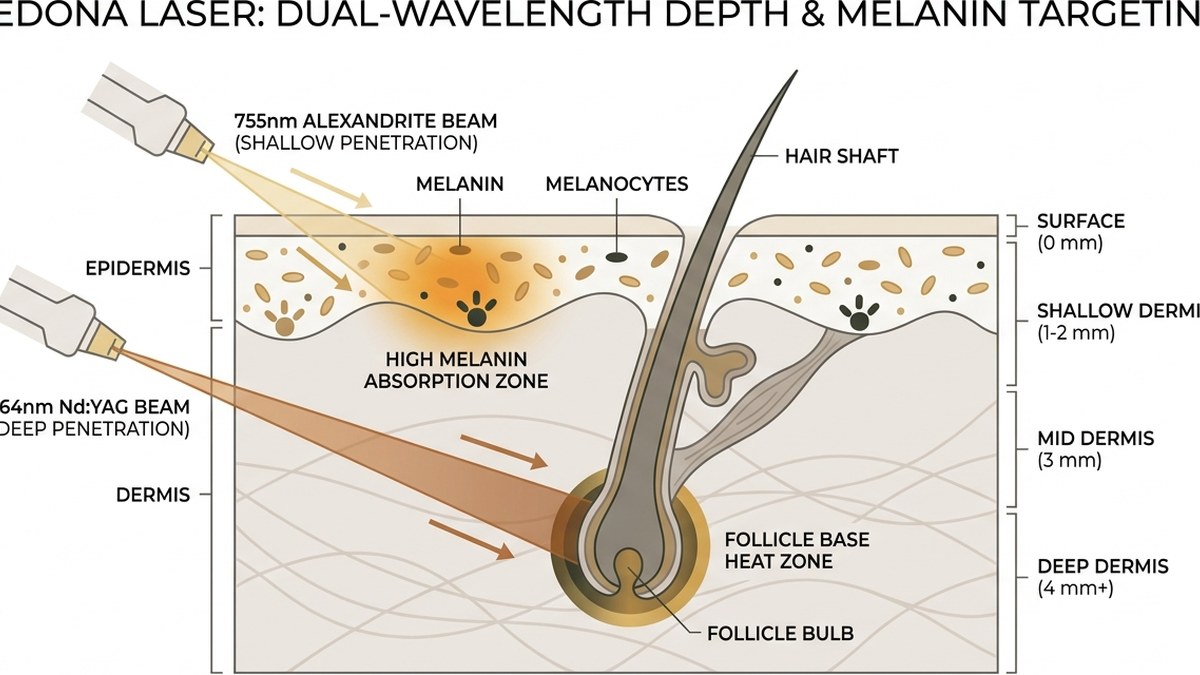
The Cynosure Elite™ is an FDA-cleared dual-wavelength laser system. It houses both a 755nm Alexandrite laser and a 1064nm Nd:YAG laser in a single console. The technician selects the appropriate wavelength for your skin tone, hair color, and treatment area. Both wavelengths use long-pulse technology, meaning the laser emits a sustained beam rather than rapid pulses, which reduces discomfort and increases follicle destruction efficiency. Here is what each wavelength does and why they work better together than separately.
755nm Alexandrite: Speed and Precision for Lighter Skin
Alexandrite targets melanin with high absorption. This makes it the fastest and most efficient wavelength for Fitzpatrick I–III skin. A full leg takes 20–30 minutes. Alexandrite has been the industry standard for light skin for over 20 years. The wavelength is specific enough to target the follicle without scattering energy into surrounding tissue. But that specificity is also its limitation: any significant melanin in the skin (from tanning, natural pigmentation, or Fitzpatrick IV+ skin) absorbs too much energy at the surface, increasing burn risk.
At Sedona Laser, we use Alexandrite for Fitzpatrick I–III patients and for lighter body areas on patients with mixed skin tones. The speed advantage is real. Treating large areas in fewer minutes means fewer sessions to cover the full body.
1064nm Nd:YAG: Deep Penetration and Safety for Darker Skin
Nd:YAG is the only wavelength FDA-cleared for all skin types, including Fitzpatrick V and VI. It penetrates 4mm or more into the dermis, bypassing surface melanin to target the follicle base. The longer wavelength means less energy is absorbed by the epidermis, which eliminates the burn and hyperpigmentation risk that makes Alexandrite unsafe for darker skin.
According to peer-reviewed research on long-pulse Nd:YAG safety profiles, proper operator technique yields less than 2% incidence of hyperpigmentation in darker skin types when using this wavelength. That statistic matters because many patients with darker skin have been turned away from clinics using shorter-wavelength systems or told "laser doesn't work for you." That is false. Nd:YAG is the gold standard for darker skin tones. It works. It is safe. It requires the right equipment and the right training.
Nd:YAG is slower to treat than Alexandrite because the lower melanin absorption requires more energy per pulse or additional passes. A full leg with Nd:YAG takes 40–50 minutes versus 20–30 with Alexandrite. But that tradeoff is necessary for safety. The alternative is not treating darker skin at all, which is what happens at clinics without Nd:YAG capability.
The FDA clearance is explicit: 1064nm Nd:YAG is approved for "all skin types." That approval exists because the clinical data supports it. If you have darker skin and are researching laser hair removal, ask the clinic what wavelength they use. If the answer is not 1064nm Nd:YAG, walk away.
Why Dual-Wavelength Beats Single-Wavelength or IPL
Single-wavelength systems force the clinic to choose their patient base. Alexandrite-only clinics serve light skin well but exclude darker skin. Nd:YAG-only clinics are safe for dark skin but slower for everyone. Dual-wavelength systems serve everyone optimally.
IPL (Intense Pulsed Light) is not a laser. It uses broad-spectrum light (500–1200nm) rather than a single focused wavelength. That lack of precision means more energy scatters into surrounding tissue, increasing skin-damage risk and reducing follicle destruction efficiency. According to comparative efficacy research published in peer-reviewed dermatology journals, medical-grade laser systems achieve superior permanent hair reduction outcomes compared to IPL-based approaches, with significantly lower risk of burns or hyperpigmentation when used by trained professionals.
At-home IPL devices use broad-spectrum light rather than true laser precision, making them less effective and carrying higher skin-damage risk, especially on darker or tanned skin. Many at-home devices are marketed as "laser" when they are IPL. They are not the same. IPL cannot match the precision or safety profile of a true medical-grade laser.
Cynosure Elite is FDA-cleared for permanent hair reduction. IPL devices are not. That distinction exists because the clinical data supports laser efficacy and does not support IPL efficacy at the same level. If a clinic offers "laser hair removal" but uses IPL, they are misrepresenting the technology. Ask to see the equipment model. If it says IPL, it is not a laser.
Clinical Outcomes: What Permanent Reduction Actually Means
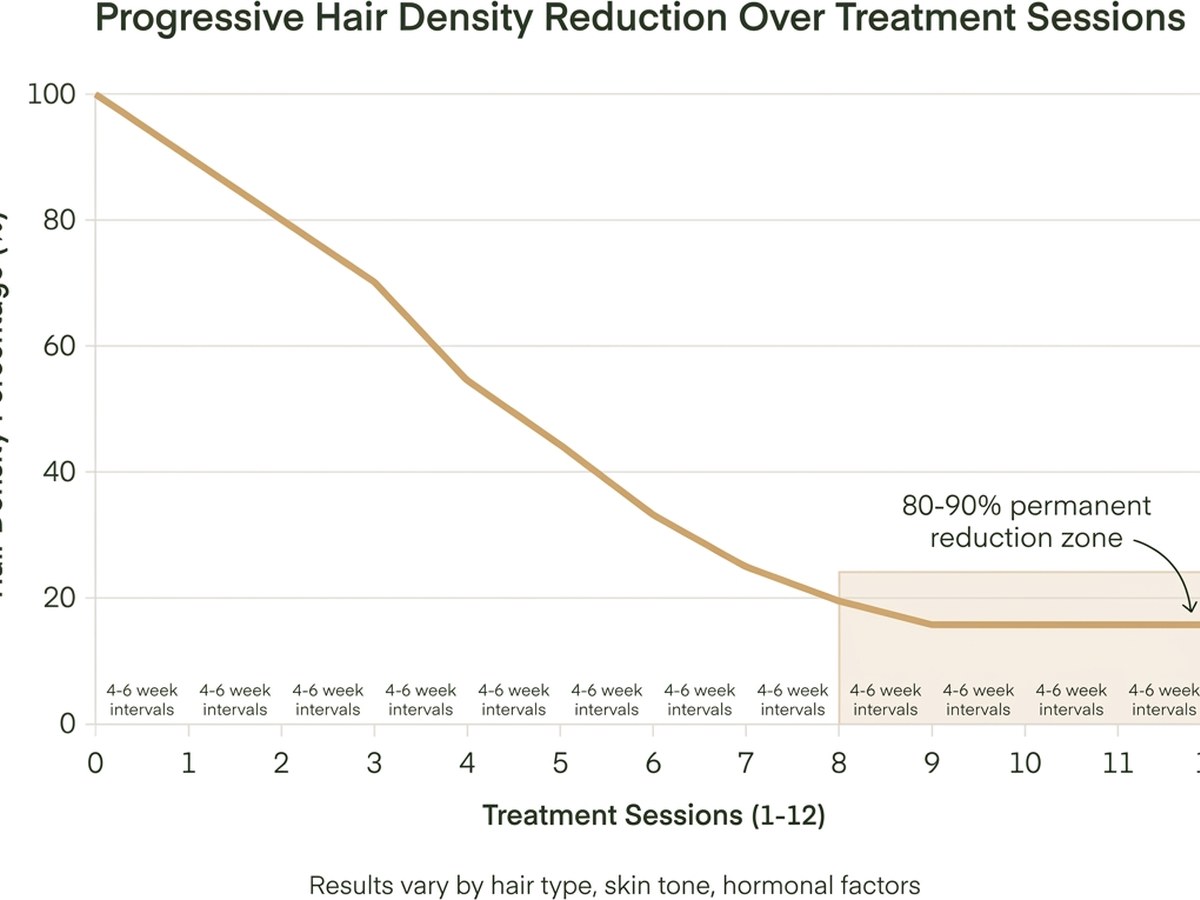
Permanent hair reduction is not the same as permanent hair removal. That distinction is critical. "Permanent reduction" means the treated follicles are destroyed and will not regrow. According to FDA guidance on permanent hair reduction claims, the term refers to long-term, stable reduction in the number of hairs regrowing after a treatment regimen. Most patients achieve 80–90% permanent reduction, meaning the vast majority of hair is permanently gone (Journal of Clinical and Aesthetic Dermatology).
Hormones, age, and medications can activate dormant follicles that were not in the growth phase during treatment. Most patients achieve substantial permanent reduction with occasional maintenance sessions for any new growth. This is the honest standard. Clinics that promise "permanent removal" or "100% hair-free forever" are overselling. At Sedona Laser, we set realistic expectations based on published clinical literature. Some patients need 1–2 maintenance sessions per year if hormonal changes or new follicle activation occurs. That is normal. See full pricing and treatment area details for what the investment looks like over the long term.
The Full Treatment Series: Timeline and Session Spacing
Hair grows in three cycles: anagen (active growth), catagen (transition), and telogen (resting). Laser only affects follicles in the anagen phase because that is when the follicle is connected to the hair shaft and melanin concentration is highest. According to American Academy of Dermatology guidelines on laser hair removal, approximately 20–30% of follicles are in anagen at any given time, which is why multiple sessions are required.
Sessions are spaced 4–6 weeks apart to allow the next batch of follicles to enter the anagen phase. Facial hair cycles faster (4 weeks), body hair slower (6 weeks). Skipping sessions or extending intervals reduces efficacy because you miss follicles as they rotate through growth phases. Consistency matters. Learn more about how session spacing affects your results.
Most patients require 8–12 sessions to cover all follicles through multiple growth cycles. Darker, coarser hair may need the upper end of the range because it has more melanin and requires higher energy settings. Lighter, finer hair may respond faster but may also be harder to target because of lower melanin concentration. The 8–12 session range accounts for individual variation.
Treatment timeline by area:
| Area | Typical Sessions | Time Per Session | |----------|---------------------|---------------------| | Face (upper lip, chin) | 8–10 | 10–15 minutes | | Underarms | 8–10 | 10 minutes | | Bikini | 8–10 | 15–20 minutes | | Full legs | 10–12 | 30–50 minutes | | Full body | 10–12 | 60–90 minutes |
Total treatment time from first session to final session: 8–12 months. This is not a quick fix. It is a commitment. But the alternative is a lifetime of shaving, waxing, or threading, which costs more in time and money over the long term.
What Affects Your Results
Results vary by skin tone, hair color, hormonal factors, and treatment adherence. Here is what influences outcomes:
Hair color: Dark hair (black, brown) has the most melanin and responds best. Red and blonde hair have less melanin and require more sessions. Gray and white hair have no melanin and will not respond to any laser. If you have gray or white hair, laser is not an option. Electrolysis is the only permanent solution for non-pigmented hair.
Skin tone: All Fitzpatrick types respond to laser when the correct wavelength is used. Darker skin requires Nd:YAG. Lighter skin responds to Alexandrite. The contrast between hair melanin and skin melanin determines how much energy can be safely applied.
Hormonal factors: Conditions that elevate androgens (PCOS, menopause, certain medications) can stimulate new follicle growth. Laser will still destroy the treated follicles, but new follicles may activate later, requiring maintenance sessions.
Treatment adherence: Skipping sessions or extending intervals reduces efficacy. If you miss a session, reschedule as soon as possible. Consistency is the single biggest factor in achieving optimal permanent reduction.
Safety Profile: Why Dual-Wavelength Reduces Risk for Darker Skin
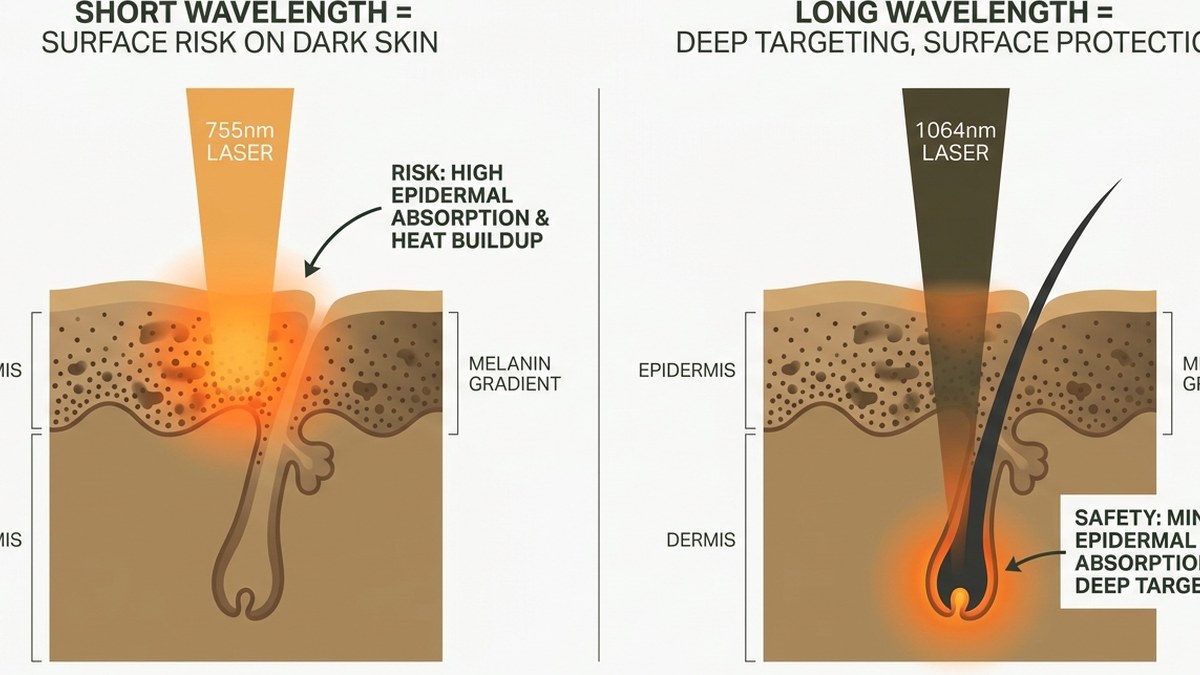
Darker skin carries higher laser injury risk with the wrong technology. That risk is real. Burns, hyperpigmentation, and scarring can occur when a short-wavelength laser (Alexandrite, diode, or IPL) is used on Fitzpatrick IV–VI skin. The high melanin concentration in darker skin absorbs too much energy at the surface, creating excessive heat in the epidermis. This is not a rare complication. It is a predictable outcome when the wrong wavelength is used.
Nd:YAG eliminates that risk by bypassing surface melanin. The 1064nm wavelength penetrates deeper with less epidermal absorption, delivering energy to the follicle without overheating the skin.
The Hyperpigmentation Risk (and How Nd:YAG Minimizes It)
Hyperpigmentation happens when surface melanin absorbs too much laser energy. The heat damages melanocytes (pigment-producing cells), triggering an inflammatory response that deposits excess melanin in the treated area. The result is dark spots that can take months to fade. Post-inflammatory hyperpigmentation (PIH) is the most common complication of laser hair removal on darker skin when the wrong wavelength is used.
Nd:YAG minimizes this risk by reducing surface absorption. The longer wavelength means less energy is absorbed by the epidermis and more energy reaches the follicle. Real-time cooling (Zimmer Cryo 5 at Sedona Laser) further protects the skin by chilling the epidermis during and after each pulse. The combination of long wavelength and active cooling keeps surface temperature low while destroying the follicle.
Contrast this with IPL or 810nm diode lasers, which are commonly used at budget clinics and chains. Both technologies carry higher PIH risk on Fitzpatrick V–VI skin because they do not penetrate deeply enough to avoid surface melanin absorption. If you have darker skin and are considering laser hair removal, confirm the clinic uses 1064nm Nd:YAG before booking. If they use anything else, the risk is not worth it.
Why Technician Training and Equipment Quality Matter
Technology alone is not enough. Operator skill determines safety. Nd:YAG requires precise energy settings: too low and the follicle is not destroyed, too high and you risk skin damage. The technician must assess skin tone, hair coarseness, and prior sun exposure before selecting energy levels. They must adjust settings in real time based on skin response. This is not a skill you learn in a weekend certification. It requires hundreds of supervised treatments.
Sedona Laser has performed more than 150,000 procedures over 20+ years. That volume means our team has treated every skin tone, hair type, and edge case. We use medical-grade equipment (Cynosure Elite is FDA-cleared for permanent hair reduction, not just "hair removal"). We assign the same technician throughout your full series for continuity and accountability. Many chains rotate staff or use under-trained technicians to reduce labor costs. That rotation increases risk because no one tracks your individual skin response over time.
Ask your provider: How many procedures have you performed on patients with my skin tone? Who will perform my treatments (same technician every time, or rotating staff)? What equipment model do you use, and is it FDA-cleared for my Fitzpatrick type? These questions separate clinics that prioritize safety from clinics that prioritize volume. Our 20+ years of clinical expertise in the Twin Cities means we can answer all of them.
What to Expect: Side Effects and Downtime
Most patients experience mild redness and swelling immediately after treatment. This resolves within 2–4 hours. There is zero downtime. You can return to work, exercise, and normal activities immediately. Some patients report a "sunburn" sensation for 24 hours. This is normal and indicates the follicle has been targeted.
Rare side effects (occurring in less than 1% of properly performed treatments) include blistering, prolonged hyperpigmentation, and temporary skin texture changes. These occur when energy settings are too high or when the patient has undisclosed risk factors (active skin infection, recent isotretinoin use, keloid scarring history).
Contraindications include pregnancy, active skin infections, recent tanning (natural or artificial), and photosensitizing medications. If you are taking antibiotics, retinoids, or other medications that increase sun sensitivity, tell your technician. We may need to lower energy settings or delay treatment until you complete the medication course.
Comparing Cynosure Elite to Other Laser Systems
Not all laser systems are equivalent. Wavelength, energy output, cooling technology, and FDA clearance all determine safety and efficacy. Here is how Cynosure Elite compares to other technologies:
| System/Technology | Wavelength(s) | Safe for Dark Skin? | Speed | Clinical Backing | |----------------------|------------------|------------------------|----------|---------------------| | Cynosure Elite | 755nm + 1064nm | Yes (all Fitzpatrick types) | Fast (Alexandrite) to moderate (Nd:YAG) | FDA-cleared, decades of clinical data | | Alexandrite-only | 755nm | No (Fitzpatrick I–III only) | Very fast | Yes (extensive validation for light skin) | | Nd:YAG-only | 1064nm | Yes (all Fitzpatrick types) | Slower | Yes (gold standard for dark skin) | | IPL (clinic) | 500–1200nm broad-spectrum | No (high risk on dark or tanned skin) | Variable | Mixed (not true laser, less clinical support) | | At-home IPL | 500–1200nm broad-spectrum | No (highest risk on dark skin) | Slow | Minimal clinical support for long-term efficacy |
Why Sedona Chose Cynosure Elite
We evaluated single-wavelength systems, IPL alternatives, and competing dual-wavelength platforms before selecting Cynosure Elite. The decision came down to three factors: clinical outcomes, safety profile, and inclusivity. Single-wavelength systems would have forced us to turn away patients. Alexandrite-only systems exclude darker skin. Nd:YAG-only systems treat everyone safely but are slower for light skin, increasing treatment time and cost. Cynosure Elite lets us treat every skin tone optimally without compromise. That is the clinical advantage of dual-wavelength technology.
The FDA clearance mattered. Cynosure Elite is cleared for permanent hair reduction on all skin types. Many competing systems lack that clearance or carry restrictions on Fitzpatrick V–VI use.
What to Ask Your Provider Before You Book
Not all clinics use the same equipment or follow the same protocols. Here are the questions to ask before you book a laser hair removal consultation:
- What wavelength(s) does your laser use? If the answer is not 755nm or 1064nm (or both), ask why. IPL is not a laser. 810nm diode lasers are less effective than Alexandrite or Nd:YAG.
- Is it FDA-cleared for my skin tone? Ask to see the FDA clearance documentation. If the clinic cannot produce it, walk away.
- How many procedures have you performed on patients with my skin type? Volume matters. A clinic that has treated 100 patients total is not the same as a clinic that has treated 150,000+ patients.
- Do you use real-time cooling? Active cooling (Zimmer Cryo 5, cryogen spray, or contact cooling) protects the skin during treatment. If the clinic does not use cooling, the risk of burns increases.
- Who will perform my treatments? If the answer is "whoever is available," that is a red flag. Continuity matters. The same technician should perform every session so they can track your skin's response and adjust settings accordingly.
These questions separate clinics that prioritize safety and outcomes from clinics that prioritize volume and profit. Sedona Laser can answer all of them. We use 755nm Alexandrite and 1064nm Nd:YAG. We are FDA-cleared for all skin types. We have performed more than 150,000 procedures. We use Zimmer Cryo 5 cooling. The same technician performs your entire series. Browse our full library of laser hair removal and skin care guides for more answers.
Who Should (and Shouldn't) Choose Dual-Wavelength Laser
Dual-wavelength laser is the right choice for most adults seeking permanent hair reduction. Ideal candidates include:
All Fitzpatrick types (I–VI). This is the primary advantage of dual-wavelength technology. If you have been turned away elsewhere because of your skin tone, Cynosure Elite is designed for you.
Adults with dark, coarse hair. High melanin concentration in the hair shaft means the laser can target the follicle effectively.
Patients committed to an 8–12 session series. Laser requires consistency. If you cannot commit to regular appointments spaced 4–6 weeks apart, results will be suboptimal.
Not ideal candidates:
Blonde, gray, or white hair. No melanin means no laser target. Electrolysis is the only permanent solution for non-pigmented hair.
Active skin infections or open wounds. Laser cannot be performed on compromised skin. Wait until the infection resolves.
Pregnant or nursing. Hormonal changes during pregnancy and breastfeeding can trigger unpredictable hair growth and reduce treatment efficacy. We recommend waiting until after you stop nursing.
The Consultation: What Sedona Evaluates
Every new patient at Sedona Laser starts with a free consultation. Here is what we evaluate:
Skin tone assessment: We use the Fitzpatrick scale (I–VI) to determine which wavelength is appropriate for your skin. This is not a visual guess. We assess your natural skin color, your skin's response to sun exposure, and any recent tanning.
Hair color and coarseness: Dark, coarse hair responds best. Lighter, finer hair requires more sessions. We assess hair density and growth patterns to estimate session count.
Medical history review: We ask about medications (photosensitizing drugs, isotretinoin, hormone therapy), skin conditions (eczema, psoriasis, keloid scarring), and hormonal factors (PCOS, menopause, thyroid conditions). These factors affect safety and efficacy.
Treatment plan mapping: We identify which areas you want to treat, estimate session count (typically 8–12), calculate total cost, and explain the timeline. We also explain which wavelength we will use for each area and why.
No-pressure recommendations: If laser is not right for you (gray hair, active infection, unrealistic timeline), we will say so. We do not sell treatments that will not work. That honesty is what separates us from chains and med spas that prioritize volume over outcomes.
Pricing Transparency: What the Full Series Costs
Laser hair removal is an investment. The typical session at Sedona Laser costs approximately $90, depending on the area treated. A typical 8–12 session series costs $720–$1,080 total. That is a one-time cost for permanent reduction, versus ongoing costs for temporary solutions.
Compare that to waxing: $50–$100 per session every 4–6 weeks. Over one year, that is $600–$1,200. Over 10 years, that is $6,000–$12,000. Laser costs more upfront but less over time. And unlike waxing, laser is permanent. Once the follicles are destroyed, they do not regrow.
At Sedona Laser, we price transparently. No hidden fees, no upsells, no pressure. See full pricing and treatment area details.
Sedona Laser's 20+ Years of Dual-Wavelength Expertise
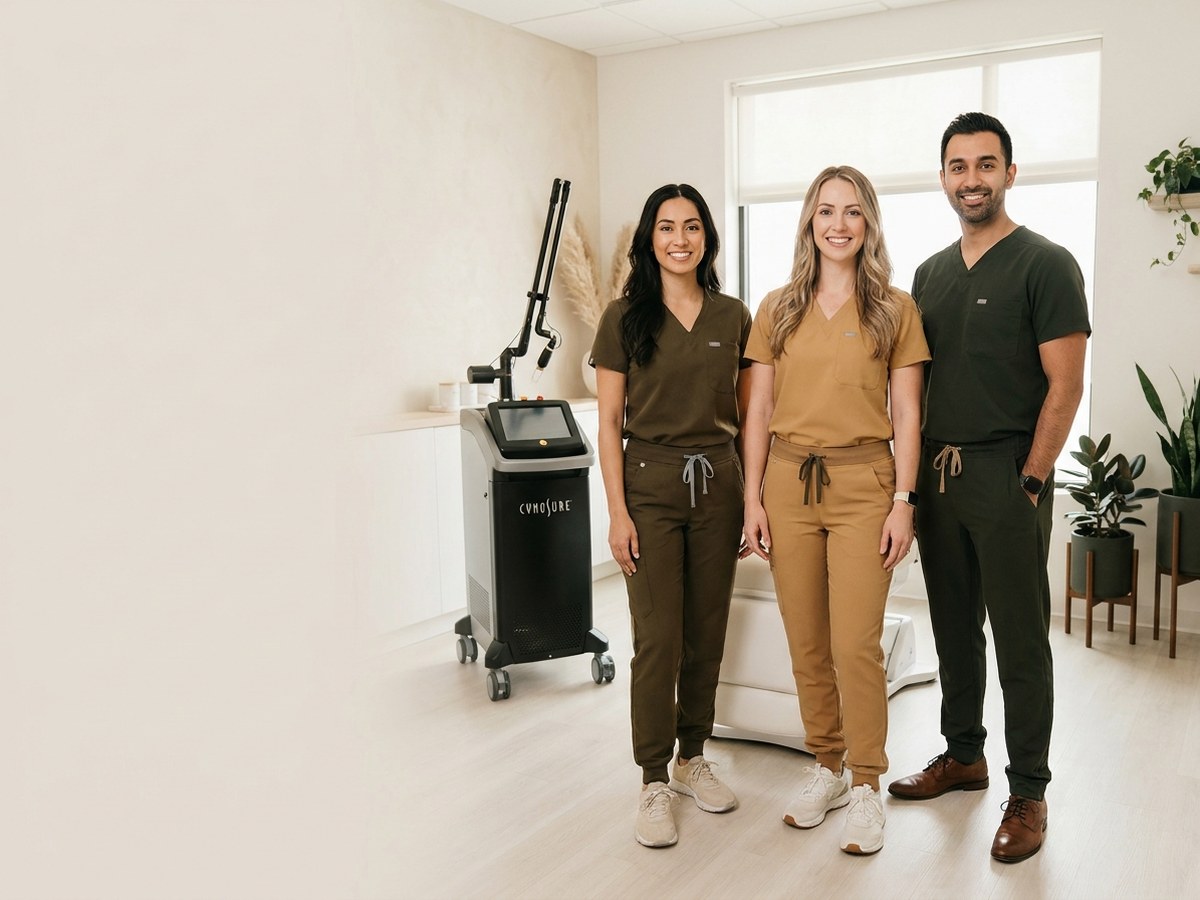
Sedona Laser Center has performed more than 150,000 laser hair removal procedures over 20+ years. We are an independent, woman-owned clinic. We do two treatments exceptionally well: laser hair removal (all skin tones) and Sofwave skin tightening for noninvasive facial rejuvenation. Depth over breadth.
The same team that performs your consultation performs every session. No staff rotation, no handoffs, no surprises. Your technician learns your skin's response and adjusts settings accordingly. That continuity is rare in this industry. Most chains and med spas rotate staff to maximize scheduling flexibility. That rotation increases risk because no one tracks your individual outcomes over time.
Why Local, Independent Expertise Matters
National chains operate on a franchise model. Staff turnover is high. Training is standardized, not personalized. Upselling is incentivized. You are a number, not a patient. General med spas offer 10–20 different treatments (Botox, fillers, facials, body contouring, laser). That breadth comes at the cost of depth. No one becomes an expert when they are doing 20 different things.
Sedona Laser does two treatments. That focus means we have performed more laser hair removal procedures on more skin types than any general med spa in the Twin Cities. We have seen every edge case, every complication, every variation. That experience matters when your safety is on the line.
We are locally owned and accountable to our community. If something goes wrong, you are not calling a corporate hotline. You are calling the clinic where your treatment was performed, speaking to the same team who knows your history. That local accountability is a trust signal. We live here. We work here. Our reputation depends on your outcomes.
What Sets Sedona Apart in the Twin Cities Market
Most local clinics use single-wavelength systems or IPL. They serve a subset of patients well and exclude the rest. Sedona Laser uses dual-wavelength technology specifically to avoid that exclusion. We treat all Fitzpatrick types safely and effectively. That commitment to inclusive care is explicit in our positioning: laser hair removal for every skin tone.
We are transparent about outcomes. We say "permanent reduction," not "permanent removal." We explain the 8–12 session timeline upfront. We tell you if laser is not right for you (gray hair, unrealistic expectations, active contraindications). That honesty builds trust.
We offer free consultations with no pressure. Come in, ask questions, see the equipment, meet the team. If you decide laser is not for you, there is no hard sell. Explore our full laser and skin tightening services to see what else we offer.
Conclusion
Dual-wavelength laser technology is the clinical standard for safe, effective hair removal across all skin tones. Single-wavelength systems force a tradeoff between speed and safety. IPL devices lack the precision to compete with true medical-grade lasers. Cynosure Elite eliminates the tradeoff by combining 755nm Alexandrite and 1064nm Nd:YAG in one system. One system, all patients, optimal outcomes for each.
If you have been turned away elsewhere because of your skin tone, Sedona Laser is designed for you. If you are researching which technology is right for your Fitzpatrick type, the answer is dual-wavelength. If you want honest answers about what laser can and cannot achieve, we will give them to you. Substantial permanent reduction after 8–12 sessions. No false promises. No overselling. Just clinical outcomes backed by more than 150,000 procedures over 20+ years.
Ready to see how dual-wavelength laser works for your skin tone? Book your free consultation at Sedona Laser Center in Edina. Call +1 952-929-4404 or visit our Laser Hair Removal service page to learn more.