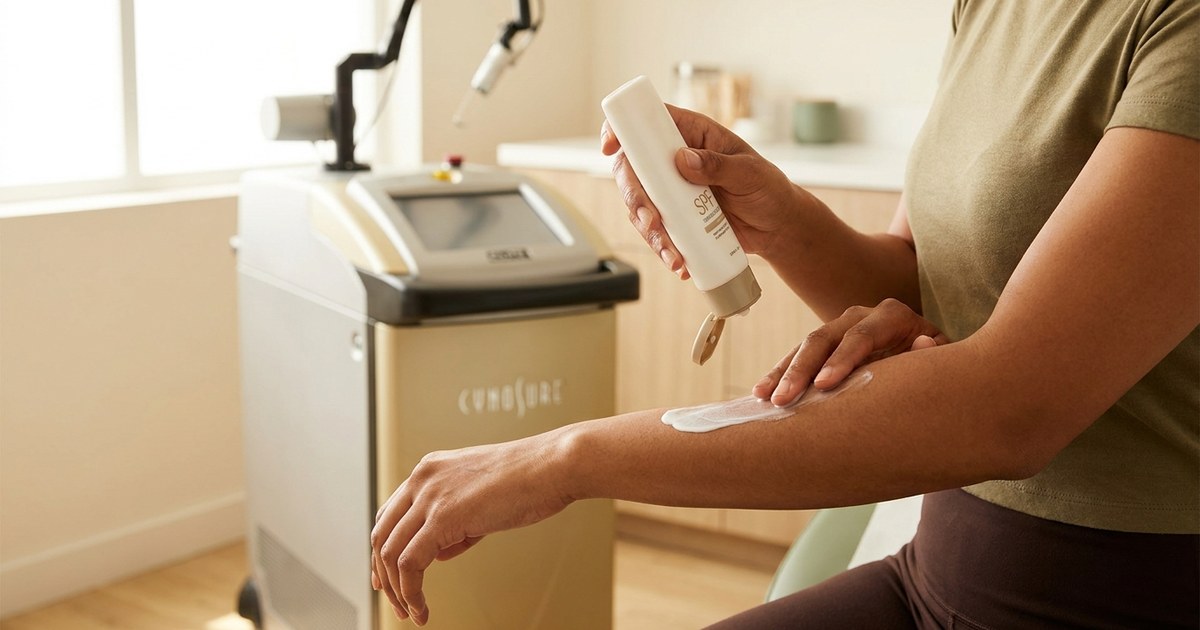
You can do laser hair removal in summer, but timing and sun protection are critical. Avoid treatment on sunburned or freshly tanned skin (wait 2–4 weeks after UV exposure). Use SPF 30+ daily between sessions. Modern dual-wavelength lasers (like the 1064nm Nd:YAG in Cynosure Elite) safely treat tanned or darker skin that single-wavelength systems cannot.
The question isn't whether summer disqualifies you from laser hair removal. The question is whether your clinic has the right technology to treat you safely year-round. Many patients delay their entire treatment series based on outdated advice from clinics using single-wavelength or IPL systems that struggle with melanin-rich skin. If you're planning a beach vacation mid-series or live in a high-sun climate, you need a clear protocol, not a blanket ban.
Can You Do Laser Hair Removal in Summer?
Yes. You can receive laser hair removal during summer months, but three conditions must be met: no active sunburn, no fresh tan from sun or tanning bed, and strict SPF compliance between sessions.
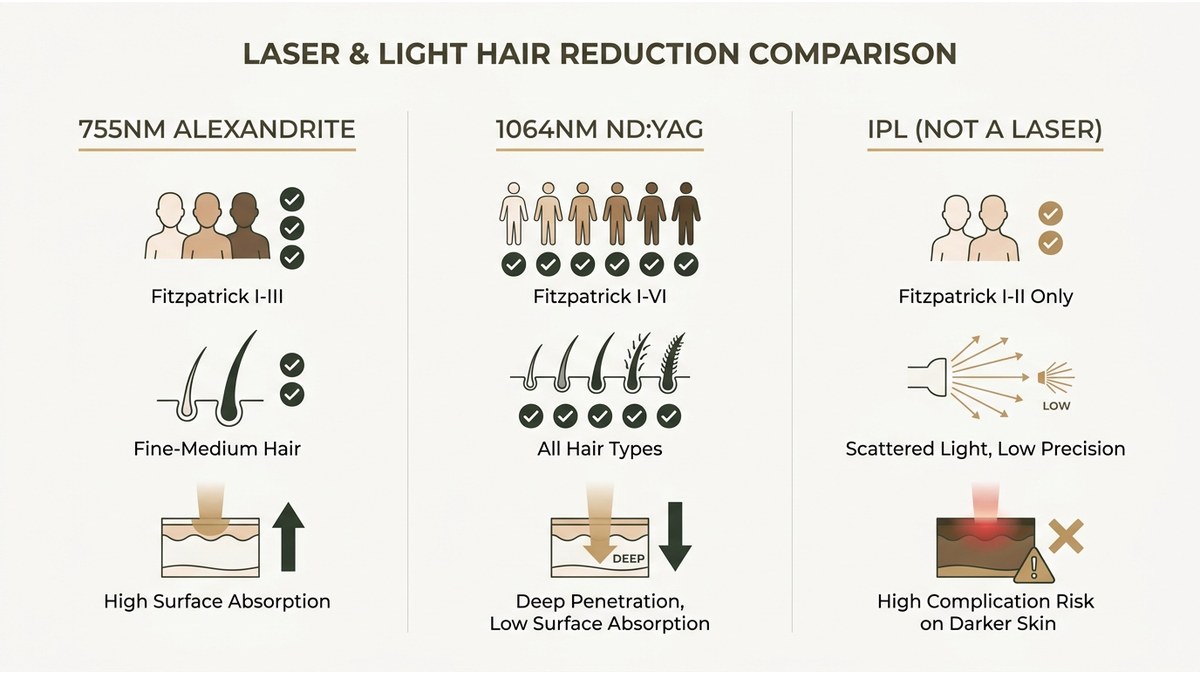
The "never in summer" myth originates from clinics using equipment that cannot safely differentiate follicle melanin from skin melanin. Single-wavelength 755nm Alexandrite lasers and IPL (Intense Pulsed Light) devices struggle when surface melanin increases due to UV exposure. Tanned skin absorbs more laser energy at these wavelengths, raising burn risk. Clinics using these systems default to "come back in winter" because their technology limits them.
Modern dual-wavelength systems like Cynosure Elite include both 755nm Alexandrite (optimized for lighter skin and finer hair) and 1064nm Nd:YAG (designed for darker or tanned skin and coarse hair). The technician selects the appropriate wavelength for your current skin state. If you have a base tan in July, the 1064nm setting safely bypasses surface melanin. The technology adapts. Your treatment series doesn't pause for four months.
Why Sun Exposure Matters: Melanin, Wavelength, and Laser Safety
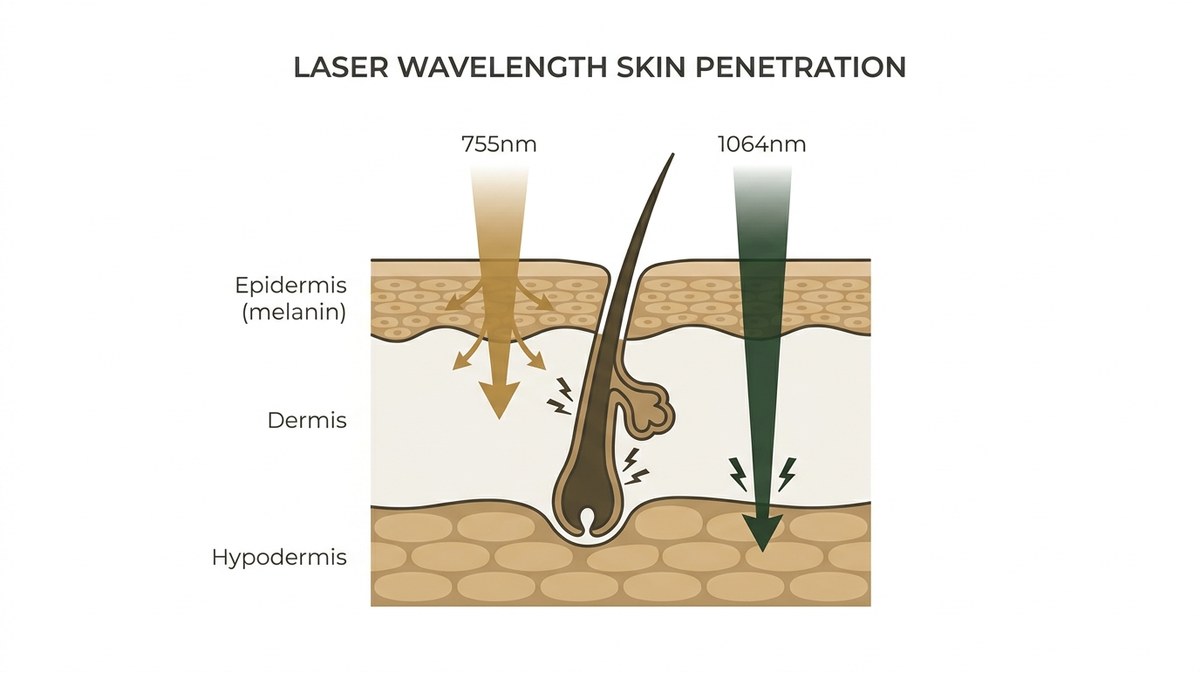
Laser hair removal works by targeting melanin inside the hair follicle. The laser beam heats melanin to disable the follicle's ability to regrow hair. The challenge: your skin also contains melanin, particularly after UV exposure.
When you tan, UV radiation triggers melanocytes to produce more melanin in the skin as a protective response. This increased surface melanin competes with follicle melanin for laser energy. At certain wavelengths (particularly 755nm and shorter), the laser cannot distinguish between the two. If your skin holds significant melanin from genetics or tanning, a short-wavelength laser can burn the skin surface before reaching therapeutic depth in the follicle.
This is where wavelength selection becomes critical. The 1064nm Nd:YAG wavelength penetrates deeper and interacts less with surface melanin. According to clinical guidelines from the American Academy of Dermatology, Nd:YAG lasers are the FDA-cleared standard for Fitzpatrick skin types IV through VI because they bypass epidermal melanin and target the follicle selectively.
Dual-wavelength systems leverage this principle. When a patient presents with tanned skin, the technician switches from 755nm Alexandrite to 1064nm Nd:YAG. The treatment proceeds safely. Single-wavelength clinics lack this option. They must refuse treatment or risk complications.
The Hard Rules: When You Cannot Get Laser
Certain skin states disqualify you from laser treatment regardless of equipment. These are clinical safety contraindications, not clinic preferences.
Sunburned skin must heal completely before treatment. A sunburn is active UV damage. The skin is inflamed, the barrier is compromised, and melanocyte activity is elevated. Lasering sunburned skin increases the risk of blistering, permanent scarring, and post-inflammatory hyperpigmentation. According to the Cleveland Clinic, sunburn is an absolute contraindication for laser procedures because the skin cannot regulate heat properly during active inflammation. Wait a minimum of 2–4 weeks after the burn resolves.
A fresh tan from sun or tanning bed requires the same wait. Even if your skin isn't burned, a new tan means elevated surface melanin. Wait 2–4 weeks for the tan to fade before scheduling a session. This applies equally to natural sun exposure and artificial UV from tanning beds.
Active UV damage (peeling, redness, blistering, or any sign of skin barrier disruption) requires postponement. Honesty during your consultation prevents complications.
SPF, Timing, and Pre-Treatment Sun Protection
Summer treatment is possible if you implement a sun protection protocol.
Use SPF 30 or higher on all areas scheduled for laser. Apply every morning. Reapply every two hours if you are outdoors. Choose a broad-spectrum formula that blocks both UVA (aging, deeper penetration) and UVB (burning, surface damage).
Cover treated areas with clothing when possible. Long sleeves, pants, hats, and UV-protective fabrics provide superior protection compared to sunscreen alone. If you are treating legs or arms and plan extended outdoor time, layering fabric over SPF creates redundancy.
Avoid tanning beds entirely during your treatment series. The artificial tan creates the same contraindication as natural sun exposure.
Schedule around vacations and high-sun events. If you have a beach trip or outdoor wedding planned, book your laser session at least two weeks after your return. Do not attempt to squeeze in a session two days before departure.
Before your first session, review how to prepare for your first professional laser hair removal session for the complete contraindication checklist.
Post-Treatment Sun Exposure: Why Your Skin Is More Vulnerable
After each laser session, your skin enters a heightened UV sensitivity window lasting 24–48 hours. During this period, treated areas are more prone to hyperpigmentation if exposed to sun.
The laser creates controlled thermal injury to the follicle. This injury triggers a localized inflammatory response. While the inflammation is mild and expected, it temporarily disrupts your skin's ability to regulate melanin production. Research published in Lasers in Surgery and Medicine found that post-laser UV exposure within 48 hours significantly increases hyperpigmentation risk compared to UV exposure one week post-treatment.
The practical takeaway: schedule your sessions when you can avoid direct sun for two full days afterward. After the 48-hour window, resume normal SPF protocol (SPF 30+ daily, reapply every two hours outdoors).
Dual-Wavelength Systems vs. Single-Wavelength and IPL
The equipment your clinic owns determines what they can and cannot treat safely.
Cynosure Elite is a dual-wavelength platform combining 755nm Alexandrite and 1064nm Nd:YAG in one system. The technician evaluates your skin tone, tanning status, hair coarseness, and treatment area, then selects the wavelength that maximizes follicle absorption while minimizing skin interaction.
For lighter skin (Fitzpatrick I–III) with fine to medium hair, 755nm Alexandrite delivers maximum melanin absorption in the follicle. For darker skin (Fitzpatrick IV–VI), tanned skin, or coarse hair, 1064nm Nd:YAG penetrates deeper, bypasses surface melanin, and reaches the follicle without overheating the epidermis. Laser hair removal for dark skin using 1064nm Nd:YAG explains why this wavelength is the clinical standard for darker and tanned skin.
Single-wavelength clinics do not have this adaptability. If they only own a 755nm Alexandrite laser, they must turn away patients with darker skin or active tans. The "never in summer" advice originates from single-wavelength limitations.
IPL adds a different problem. It uses broad-spectrum light spanning 500–1200nm. This scattered energy heats follicles, surrounding tissue, and melanin indiscriminately. It lacks the precision of a true laser beam. Laser Hair Removal vs. IPL: Medical-Grade Precision and Why Wavelength Matters details why IPL is particularly dangerous on darker or tanned skin.
What to Do If You Get Sunburned Between Sessions
Call the clinic immediately. Do not wait until your scheduled appointment to disclose the sunburn.
Reschedule your session at least 2–4 weeks out, depending on burn severity. Mild redness may clear in two weeks. Peeling or blistering requires four weeks minimum. The technician will assess your skin at the rescheduled appointment.
While you heal, use aloe vera gel or a gentle, fragrance-free moisturizer to support barrier repair. Stay hydrated. Avoid further UV exposure completely. Hair Growth Cycles Explained: Why You Need Multiple Sessions to Catch Every Follicle clarifies why a single delayed session does not derail your long-term outcome.
Summer Laser FAQ
Can I go to the beach after laser hair removal?
Yes, but not within 48 hours of treatment. After the initial sensitivity window, you can go to the beach if you apply SPF 30+ every two hours and cover treated areas with clothing when possible.
Can I use a tanning bed during my laser series?
No. Tanning beds deliver concentrated UV radiation that increases skin melanin. This creates the same contraindication as natural sun exposure. Wait until your treatment series is complete.
Will laser work if I'm already tan?
Yes, if the clinic has 1064nm Nd:YAG wavelength capability. IPL devices and single-wavelength 755nm systems cannot treat tanned skin safely. Dual-wavelength systems like Cynosure Elite switch to the 1064nm setting. How Many Laser Hair Removal Sessions Do You Need? Timeline helps you plan your series around lifestyle priorities.
How long after laser can I tan?
Wait at least two weeks post-session before intentional UV exposure. Always use SPF 30+ even after the two-week mark. Tanning between sessions increases melanin, which may require the technician to adjust settings or delay your next appointment.
Why Sedona's Dual-Wavelength System Gives You Year-Round Freedom
You do not have to pause your treatment plan or wait until winter. Sedona Laser Center uses Cynosure Elite dual-wavelength technology, meaning the technician selects the safe wavelength for your current skin state (whether you are pale in February or have a base tan in July).
Over 17 years of practice, Sedona Laser Center has built a reputation as the specialist clinic for patients seeking permanent hair reduction without the rotation of staff, upsell pressure, or exclusionary gatekeeping found at larger med spas. The same expert team evaluates your skin, adjusts settings, and guides you through every session.
You start with a free consultation. The technician assesses your skin tone, hair type, medical history, and sun exposure patterns. If you have a vacation planned, the timeline adjusts. If you get sunburned between sessions, you reschedule without penalty. The process is built for real life, not ideal laboratory conditions.
This is the difference between a clinic that can treat you year-round and a clinic that sends you away for four months. Learn more about all of our services designed to give you the results you deserve.
Book Your Free Consultation Book now