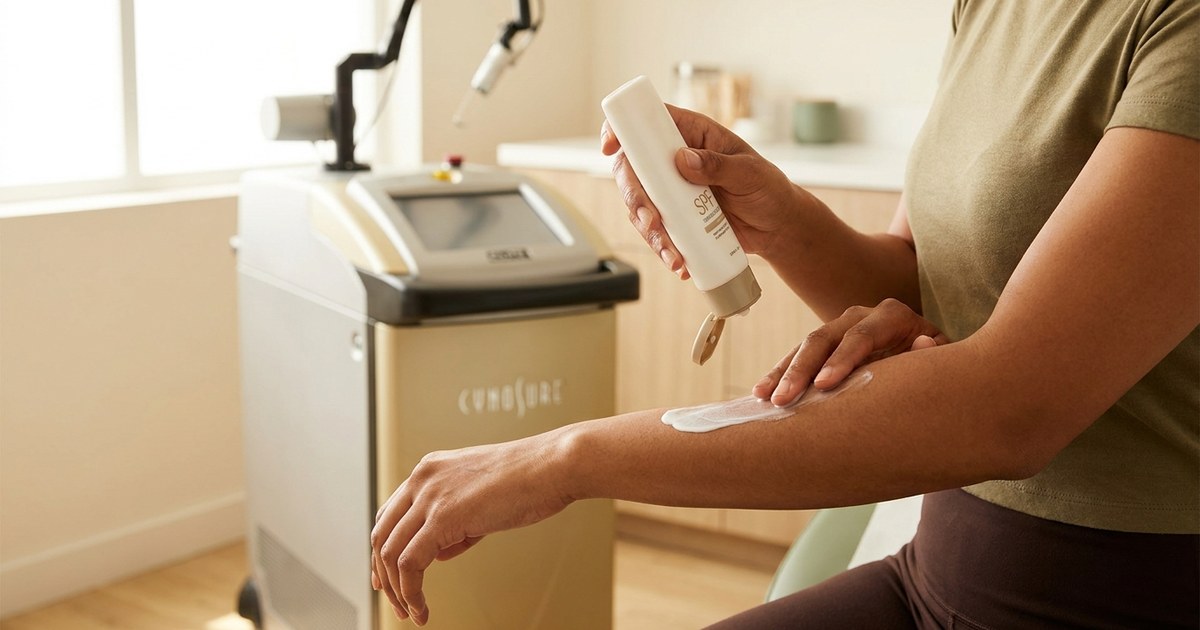
Most laser hair removal side effects are mild and temporary: redness, slight swelling, and a warm tingling sensation that resolves within 24–48 hours. Serious complications like burns or scarring are extremely rare when the procedure is performed by a certified technician using medical-grade dual-wavelength systems. Long-term side effects are minimal and uncommon.
If you're researching laser hair removal in Edina, Minnesota, you've likely encountered alarming claims about burns, permanent skin damage, or cancer risk. Most fears stem from outdated equipment, untrained operators, or confusion between medical-grade lasers and home IPL devices. The clinical reality: when performed correctly with appropriate technology, laser hair removal carries a well-documented safety profile with predictable, manageable side effects that fade quickly.
This guide explains what to expect before, during, and after each session: which reactions are normal, which warrant a call to your clinic, and how to minimize discomfort through proper preparation and aftercare.
What Are the Most Common Side Effects? (And What's Normal)
Nearly every patient experiences mild, localized reactions in the treatment area immediately after a session. These indicate the laser successfully targeted the hair follicle root, not signs of damage. According to Mayo Clinic's laser hair removal guidance, the procedure provides long-term hair reduction with minimal downtime, and temporary laser hair removal side effects resolve on their own.
The three most common reactions are laser hair removal redness swelling (similar to mild sunburn) around each follicle, and a warm or tingling sensation that fades as your skin cools. All three typically peak within the first hour and diminish significantly by the next morning.
Redness and Slight Swelling (Why They Happen)
When the laser pulse strikes a hair follicle, it targets melanin pigment in the hair shaft. The energy converts to heat, raising the follicle temperature high enough to disable the root's ability to regrow hair. This controlled thermal injury triggers your body's natural inflammatory response: blood vessels dilate to increase circulation, causing the temporary redness and mild swelling visible on the surface.
This reaction confirms the treatment is working. The swelling isn't tissue damage; it's your immune system responding to the destroyed follicle. Because hair grows in cycles, only follicles in active growth phase (anagen) contain enough pigment for the laser to target effectively. This is why multiple sessions spaced 4–8 weeks apart are required.
Most patients describe laser hair removal redness swelling as similar to a mild sunburn (pink rather than bright red) and concentrated in the treated area. Swelling appears as tiny raised bumps around each follicle opening. Both reactions are more noticeable on sensitive areas like the bikini line, underarms, or face.
Tingling or Warm Sensation During Treatment
During the session, you'll feel a quick snapping sensation as each laser pulse fires, followed by warmth spreading across the treated area. This is heat from the laser reaching the follicle root beneath the skin surface. The sensation varies by body area: bony areas with less subcutaneous fat (shins, ankles, upper lip) feel more intense than fleshy areas (thighs, buttocks).
Medical-grade systems like the Cynosure Elite dual-wavelength laser integrate real-time cooling to protect the epidermis while the laser heats the follicle below. A cryogen spray or cooling tip fires milliseconds before each pulse, numbing the surface and drawing heat away from the top layer of skin. This significantly reduces discomfort and prevents surface burns.
The tingling sensation you feel immediately after treatment is your nerve endings responding to localized heat. It fades within 30–60 minutes as your skin temperature returns to normal. If the sensation persists beyond two hours or intensifies, contact your clinic.
Temporary vs. Long-Term: Setting Realistic Expectations
One persistent source of anxiety is the conflation of temporary side effects with permanent damage. The distinction is critical: temporary reactions resolve completely within hours to days, while long-term side effects (which are rare) persist beyond the normal healing window.
How Long Does Redness Last After Laser Hair Removal?
For most patients, redness peaks within the first hour post-treatment and fades to faint pink within 2–6 hours. By the next morning, the treated area typically looks normal. Sensitive areas (face, bikini line, underarms) may stay pink for up to 24–48 hours, especially after the first session.
If you have very fair or reactive skin, redness may linger closer to the 48-hour mark. Our full pre-treatment prep checklist includes steps to minimize this response, such as avoiding sun exposure and skipping exfoliating products in the week before your appointment.
Redness persisting beyond 72 hours or worsening after the first day is not typical and warrants a call to your clinic. This can indicate an adverse reaction to the settings used or (rarely) the early stage of a complication needing clinical evaluation.
Are Long-Term Side Effects Common?
Long-term side effects from laser hair removal are minimal and uncommon when the procedure is performed by a trained technician using appropriate equipment for your skin tone. NHS guidance on laser safety describes patch testing before a full course as standard practice.
Over 150,000 procedures completed at our clinic over 20+ years, serious long-term complications have been exceedingly rare. Nearly all cases involved patients who didn't disclose relevant medical history or who ignored post-treatment sun exposure restrictions. Textural changes, pigmentation shifts that don't resolve, or scarring are outlier events tied to operator error, incorrect equipment selection, or failure to follow aftercare instructions.
Rare but Serious Side Effects (And How to Avoid Them)
While most patients experience only mild, transient reactions, a small percentage encounter more serious side effects. Nearly all trace back to preventable causes: operator error (incorrect settings for the patient's skin type), equipment mismatch (using a wavelength unsuitable for darker skin tones), or patient non-compliance with instructions.
Burns and Blistering (Operator Error, Not the Technology)
Thermal burns occur when too much laser energy reaches the skin surface instead of being absorbed by the hair follicle beneath. This happens when settings are too aggressive for the patient's skin tone, when the cooling system malfunctions, or when the handpiece is held stationary too long in one spot.
The precision difference between medical-grade laser and IPL devices is significant: true lasers emit a single, focused wavelength that can be calibrated to penetrate to the exact depth of the follicle root, while IPL scatters broad-spectrum light across multiple wavelengths, increasing surface heating risk.
Medical-grade systems prevent burns through multiple safeguards. Patch testing is recommended by the American Society of Plastic Surgeons before starting a full course. Integrated cooling (cryogen spray or contact cooling) protects the epidermis during each pulse. Certified technicians adjust fluence (energy per unit area), pulse duration, and spot size based on your Fitzpatrick skin type and treatment area.
If you notice blistering, oozing, or white or gray discoloration in the treated area within hours of your session, contact your clinic immediately. These are signs of a second-degree burn requiring clinical management to prevent infection and scarring.
Hyperpigmentation on Darker Skin Tones
Hyperpigmentation (darkening of the treated skin) occurs when laser energy is absorbed by melanin in the epidermis rather than transmitted through to the follicle. This is a wavelength problem. Shorter wavelengths (below 800nm) are absorbed by surface melanin in darker skin, causing localized inflammation that triggers excess melanin production. The result is dark patches that can take months to fade.
This complication is almost entirely avoidable by using the correct laser wavelength. The 1064nm Nd:YAG wavelength (the longer of two wavelengths in dual-wavelength systems like Cynosure Elite) penetrates deeper and is absorbed less by epidermal melanin, making it the clinically validated safe choice for Fitzpatrick skin types IV–VI. Laser hair removal for dark skin requires this specific wavelength; single-wavelength systems limited to 755nm Alexandrite or IPL devices are unsuitable.
If post-inflammatory hyperpigmentation does occur, it typically appears within a few days as brown or gray patches. Most cases resolve gradually over 3–6 months with diligent sun protection and topical treatments (vitamin C serum, niacinamide, or prescription hydroquinone if needed). Permanent pigmentation changes are rare and almost always tied to inappropriate wavelength selection.
Does Laser Hair Removal Cause Scarring or Skin Cancer?
Two myths persist: that laser hair removal causes scarring comparable to burn scars, and that repeated exposure increases skin cancer risk. Both misunderstand the technology.
Scarring is exceptionally rare and occurs only when a severe burn becomes infected or isn't treated properly. When settings are correct, surrounding dermal tissue experiences only mild, controlled thermal injury that heals without scar formation.
The cancer concern stems from confusion about radiation types. According to Mayo Clinic, lasers emit non-ionizing radiation (the same category as visible light). Non-ionizing radiation does not have enough energy to break molecular bonds or damage DNA, which is the mechanism by which ionizing radiation (X-rays, UV from the sun) causes cancer. Decades of research have found no link between medical laser treatments and increased skin cancer incidence.
How to Minimize Laser Hair Removal Side Effects Before, During, and After Treatment
Even mild side effects can be reduced through deliberate preparation, real-time cooling during the session, and disciplined aftercare. These protocols are the difference between a session leaving you pink for a few hours versus one causing prolonged redness.
Pre-Treatment Prep (What to Do the Week Before)
Proper preparation begins 4–6 weeks before your first session. The goal is to maximize contrast between hair pigment and skin tone so laser energy is absorbed by the follicle, not the surface.
Stop waxing, plucking, threading, or using depilatory creams 4–6 weeks before treatment. These methods remove the hair root, leaving nothing for the laser to target. Shaving is the only acceptable hair removal method during this window. Shave the treatment area 24 hours before your appointment.
Avoid sun exposure and tanning products for at least two weeks before treatment. A tan increases melanin in your epidermis, which competes with follicle melanin for laser energy and raises burn risk. Use broad-spectrum SPF 30+ if you must be outdoors.
Skip exfoliating products (retinoids, AHAs, BHAs, scrubs) for 3–5 days before your session. According to Mayo Clinic, exfoliation thins the outer skin layer and can make it more reactive to laser energy. Arrive with clean, dry skin (no lotions, deodorant, or makeup on the treatment area).
During the Session: Why Real-Time Cooling Matters
The integrated cooling system is one of the most important safety features in modern medical-grade lasers. It's a burn-prevention mechanism that allows the technician to use energy levels required to disable the follicle without overheating the skin surface.
NHS laser guidance describes cooling as standard practice during treatment to minimize epidermal injury. At Sedona Laser, we use Zimmer Cryo 5, which delivers a continuous stream of chilled air (−30°C) to the treatment area throughout the session. This cools the epidermis while laser pulses heat the follicles beneath.
You'll feel the cool air before, during, and after each laser pulse. If the cooling stops or feels inadequate at any point, speak up immediately.
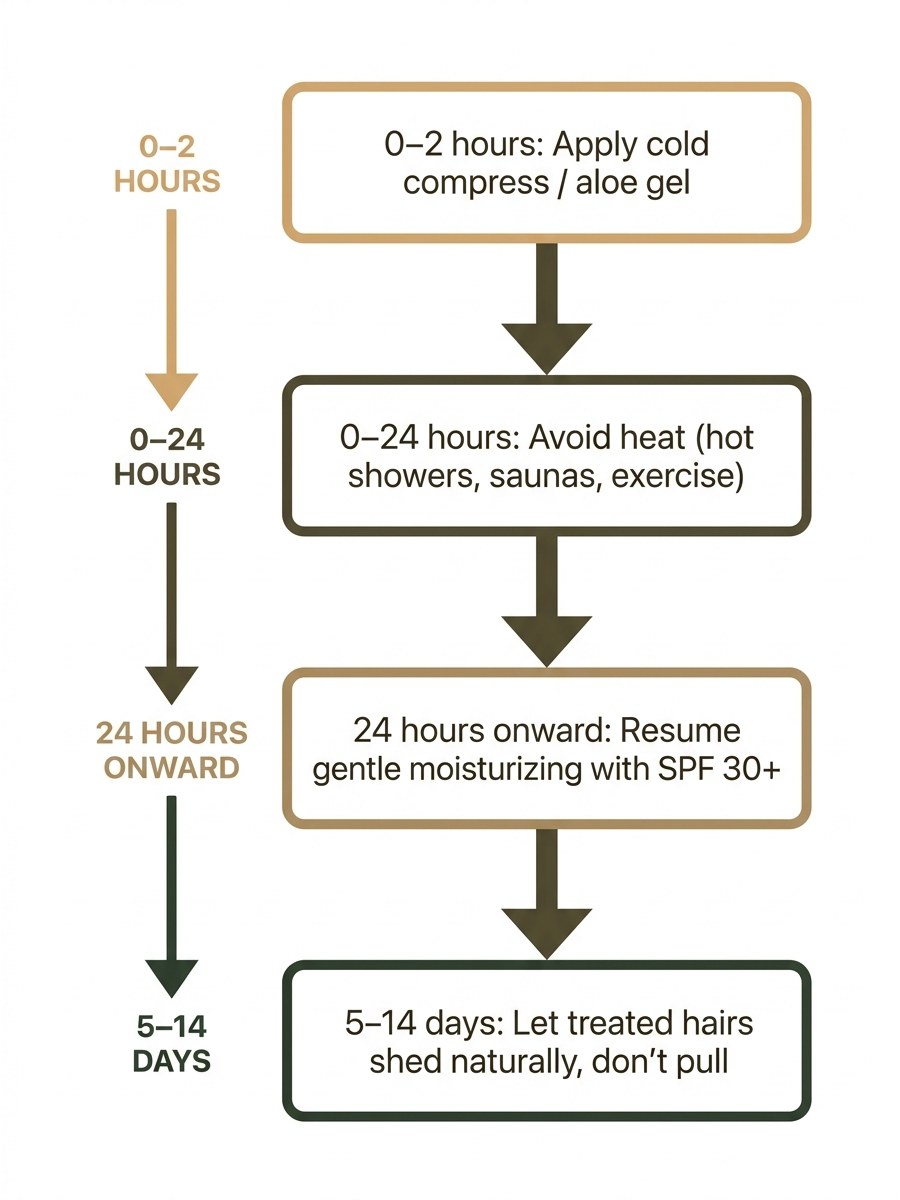
Post-Treatment Care (The First 48 Hours)
The first 48 hours after treatment are when your skin is most vulnerable. Following these aftercare steps minimizes side effects:
When to Call Your Clinic (Red Flags vs. Normal Healing)
Most side effects resolve on their own, but a small number of symptoms indicate you need clinical evaluation. Knowing the difference prevents delayed treatment of complications.
Call your clinic within 24 hours if you experience:
Normal healing signs that don't require a call:
When in doubt, contact your clinic. It's always better to check in and be reassured than to wait and risk a complication becoming permanent.
Why Choosing the Right Provider and Technology Matters
Every preventable complication discussed in this article ties back to two variables: the operator's training and the equipment's capability. A certified technician using medical-grade dual-wavelength technology can treat all skin tones safely and achieve consistent results.
The Cynosure Elite dual-wavelength system (755nm Alexandrite for lighter skin and fine hair, plus 1064nm Nd:YAG for darker skin and coarse hair) allows us to customize every session to the patient in the chair. We adjust fluence, pulse duration, and spot size based on your Fitzpatrick skin type, hair color and coarseness, and how your skin responded in the previous session.
Our laser and skin treatments are performed exclusively by certified technicians with specialized training in laser-skin interaction. We patch-test before starting a full course. We document settings and outcomes for every session so we can refine the protocol as we go. And we've completed over 150,000 procedures in 20+ years.
When evaluating clinics, ask these questions:
If the answers are vague or the clinic pressures you to commit before you've seen the equipment or met the technician, walk away.
Laser hair removal is one of the safest cosmetic procedures available when performed correctly. The laser hair removal side effects you've read about in this guide (redness, swelling, temporary tingling that fades within 24–48 hours) are real, but they're also manageable, temporary, and (in the case of serious complications) almost entirely preventable through proper equipment selection, operator training, and patient adherence to how to prevent laser side effects instructions. Over 20 years and 150,000+ procedures, we've refined every step of the process to minimize even mild reactions.
If you have questions about your skin tone, side-effect concerns, or what to expect during your first session, we're here to answer them.